Jump to a section
- Invisalign vs Braces: A Complete Guide to Choosing the Right Orthodontic Treatment
- How Invisalign Works
- How Traditional Braces Work
- Appearance and Aesthetics
- Comfort and Day-to-Day Experience
- Treatment Time: How Long Does Each Take?
- Effectiveness: What Each Treats Best
- Who Is a Good Candidate for Invisalign?
- Removability: Freedom vs Consistency
- Diet and Food Restrictions
- Oral Hygiene During Treatment
- Caring for Your Invisalign Aligners
- Invisalign vs Braces: Side-by-Side Comparison
- Cost Comparison: Invisalign vs Braces in Huntington Beach
- Age Considerations: Teens vs Adults
- Invisalign vs Braces in Huntington Beach — What Local Patients Should Know
- Maintenance After Treatment: Retainers and Long-Term Care
- What to Expect in Your First Week
- Making Your Decision
- Schedule Your Free Invisalign Consultation
- Frequently Asked Questions
Invisalign vs Braces: A Complete Guide to Choosing the Right Orthodontic Treatment
If you are considering straightening your teeth, you have probably found yourself weighing Invisalign vs braces. Both treatments can deliver a healthier, more confident smile, but they take very different paths to get there.
With decades of experience in general and cosmetic dentistry — including advanced orthodontic training — Dr. Richard Baldwin has helped thousands of Huntington Beach patients navigate this exact decision. Below, we break down every factor that matters so you can walk into your consultation feeling informed and confident.
How Invisalign Works
Whichever option you choose, a retainer afterward is what keeps the result — we make clear, Hawley and permanent bonded retainers.
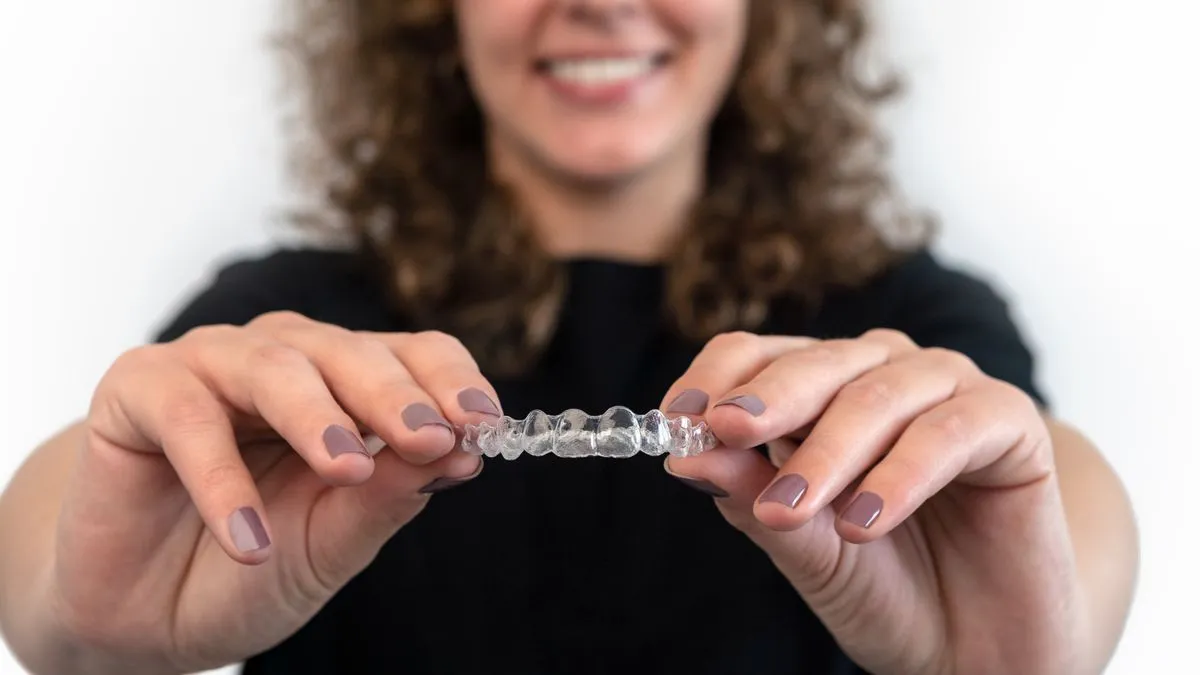
Invisalign uses a series of custom-fabricated, removable clear plastic trays to move teeth gradually into their ideal positions. The process begins with the iTero digital scanner — no messy impressions needed — which creates a precise 3D model of your teeth in minutes. Using Invisalign’s ClinCheck software, Dr. Baldwin maps out the exact movement of each tooth from start to finish, and you can preview your projected results before treatment begins. For treatment details, pricing ranges, and teen-specific fit, start with the main Invisalign in Huntington Beach page.
Each set of aligners — fabricated from Invisalign’s proprietary SmartTrack thermoplastic for a precise, comfortable fit — is worn for one to two weeks before switching to the next. The trays apply gentle, controlled pressure to specific teeth at each stage, and you visit our office every six to eight weeks for progress checks. Because the aligners are removable, you take them out to eat, brush, and floss. For the best results, wear them 20 to 22 hours per day. Learn more about our Invisalign cost and treatment options in Huntington Beach.
How Traditional Braces Work
Traditional braces use metal brackets bonded to each tooth, connected by archwires and elastic bands. At adjustment appointments every four to six weeks, Dr. Baldwin tightens or replaces the wire, applying new pressure that guides teeth into alignment. Modern braces are significantly smaller than older versions, and ceramic or tooth-colored brackets are available for a less noticeable look.
Because braces are permanently attached, there is no compliance factor. They work around the clock whether you are sleeping, eating, or going about your day — a reliable choice for patients who may struggle with the discipline of removable aligners.
Appearance and Aesthetics
For many patients, appearance is the deciding factor. Invisalign aligners are nearly invisible from conversational distance — most people will not notice them. This makes them especially popular among working professionals and adults seeking discretion. Read more in our guide to Invisalign for adults.
Metal braces are visible, though ceramic brackets blend with the tooth color and lingual braces (placed behind the teeth) are hidden from view. Both alternatives cost more than standard metal brackets.
Comfort and Day-to-Day Experience
With Invisalign, most patients feel mild pressure for the first day or two after switching trays. The smooth plastic rarely irritates cheeks or gums. Braces can cause more varied discomfort — soreness lasting two to five days after each tightening, plus brackets and wires that rub against cheeks and lips. Orthodontic wax helps, but occasional irritation is part of the experience. Most patients describe Invisalign as the more comfortable day-to-day option.
Treatment Time: How Long Does Each Take?
Treatment duration depends on case complexity, not just the method. Here are general ranges:
- Invisalign: 6 to 18 months for mild to moderate cases. Some complex cases may extend to 24 months.
- Traditional braces: 12 to 36 months, with an average of about 18 to 24 months.
For straightforward crowding or spacing, Invisalign often achieves results faster. For significant bite corrections, braces may be more efficient because they apply constant force without relying on compliance.
Effectiveness: What Each Treats Best
Invisalign excels at:
- Mild to moderate crowding
- Gaps between teeth
- Minor overbite, underbite, or crossbite
- Relapse after previous orthodontic treatment
- Cosmetic alignment improvements
Traditional braces are often better for:
- Severe crowding or rotations
- Significant overbite, underbite, or crossbite
- Teeth that need vertical movement (intrusion or extrusion)
- Complex cases requiring precise root movement
- Younger patients whose teeth and jaws are still developing
Invisalign technology has improved dramatically in recent years, and many cases that once required braces can now be treated with clear aligners. Dr. Baldwin evaluates each patient individually and always recommends the option most likely to succeed.
Who Is a Good Candidate for Invisalign?
Invisalign treats a wide range of orthodontic conditions. Patients typically see excellent results for:
- Crowded teeth — Not enough room in the jaw causes overlap and misalignment
- Gaps between teeth — Spacing issues that affect both appearance and oral health
- Overbite — Upper front teeth extend too far over the lower front teeth
- Underbite — Lower teeth protrude past the upper front teeth
- Crossbite — Some upper teeth sit inside the lower teeth rather than outside
- Open bite — Upper and lower teeth do not fully meet when the mouth is closed
- Relapse — Minor shifting after a previous orthodontic treatment
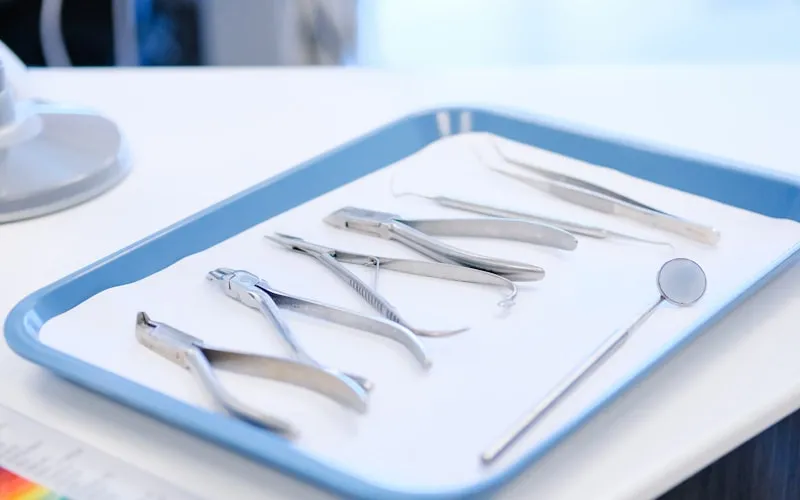
For severe malocclusions or cases requiring significant root movement, traditional braces may still be the right call. The only definitive answer comes from a clinical exam. Dr. Baldwin will examine your teeth, review your bite, and give you a clear recommendation.
Patient commitment also matters. Because the aligners are removable, success depends on wearing them 20 to 22 hours per day. Teens and adults who stay consistent with their wear schedule achieve the most predictable, complete results.
Removability: Freedom vs Consistency
Invisalign’s removability is one of its biggest selling points — and its biggest responsibility. You can take aligners out for meals, brushing, and special occasions, but if you do not wear them 20 to 22 hours per day, treatment will stall.
Braces eliminate that variable entirely. They are bonded in place and working around the clock. For teens or anyone who might forget to put aligners back in, this built-in consistency is a real advantage.
Diet and Food Restrictions
With Invisalign, there are no food restrictions. Remove the aligners before every meal, eat whatever you like, brush your teeth, and put them back in. The only rule is to avoid drinking anything other than water while the trays are in, since colored or sugary beverages can stain the aligners or promote decay.
Braces come with a well-known list of foods to avoid:
- Hard foods like nuts, popcorn, ice, and hard candy
- Sticky foods like caramel, taffy, and gummy candy
- Crunchy foods like whole apples and raw carrots (cut into smaller pieces instead)
- Chewy bread like bagels and thick pizza crust
Eating restricted foods risks breaking a bracket or bending a wire, leading to unplanned office visits and potential treatment delays.
Oral Hygiene During Treatment
Maintaining excellent oral hygiene is critical during any orthodontic treatment, but the effort level differs significantly.
Invisalign: Remove the aligners and brush and floss normally. You also need to clean the trays themselves — a gentle brush with lukewarm water or Invisalign cleaning crystals keeps them clear. For a refresher on proper technique, see our guide on how to brush your teeth properly.
Braces: Brushing and flossing around brackets and wires takes more time. Food particles get trapped easily, and plaque builds up around the brackets. Patients need to brush after every meal and use interdental brushes or floss threaders. Neglecting hygiene during braces can lead to white spot lesions (early-stage decay) around the brackets.
Caring for Your Invisalign Aligners
Keeping your aligners clean protects both the trays and your teeth throughout treatment:
- Rinse and brush twice daily — Use lukewarm water and a soft toothbrush. Avoid regular toothpaste, which is abrasive enough to scratch the surface and cloud the plastic.
- Never use hot water — Heat warps the thermoplastic material and ruins the fit.
- Store in the case when not wearing — Loose aligners get lost, broken, or contaminated. Keep the provided case with you at all times.
- Brush before reinserting — Food particles trapped between your teeth and trays promote decay and staining.
- Drink water only while wearing — Coffee, tea, and colored beverages stain clear trays within days.
Proper aligner care and good oral hygiene go hand in hand. Patients who take care of their trays consistently tend to finish treatment with both a straighter smile and healthier teeth.
Invisalign vs Braces: Side-by-Side Comparison
| Feature | Invisalign | Traditional Braces |
|---|---|---|
| Appearance | Nearly invisible clear trays | Visible metal or ceramic brackets |
| Comfort | Smooth plastic; mild pressure with new trays | Brackets and wires may irritate cheeks and lips |
| Removability | Fully removable | Fixed for the entire treatment |
| Treatment time | 6-18 months (typical) | 12-36 months (typical) |
| Office visits | Every 6-8 weeks | Every 4-6 weeks |
| Food restrictions | None (aligners are removed to eat) | Hard, sticky, and crunchy foods must be avoided |
| Oral hygiene | Normal brushing and flossing routine | Requires extra tools and time to clean around brackets |
| Best for | Mild to moderate alignment issues | Complex orthodontic cases |
| Compliance required | High — must wear 20-22 hours/day | None — braces work automatically |
| Cost range | $3,000-$7,000 | $3,000-$6,000 |
| Breakage risk | Aligners can crack if mishandled | Brackets can break from hard foods or impact |
| Speech impact | Slight lisp for first few days (temporary) | Minimal after initial adjustment |
| Emergency visits | Rare | Occasional (broken bracket or poking wire) |
Cost Comparison: Invisalign vs Braces in Huntington Beach
Cost is understandably a major consideration, but comparison shoppers usually need two answers: which treatment fits the case, and what range to expect before a consultation. In the Huntington Beach area, expect the following general ranges:
- Invisalign: $3,000 to $7,000
- Traditional braces: $3,000 to $6,000
The actual price depends on case complexity and treatment length. Many dental insurance plans include orthodontic benefits that can reduce out-of-pocket costs. HB Dentist also offers flexible payment plans, and our team will walk you through all options during your consultation. For our full Huntington Beach cost breakdown, see Invisalign cost in Huntington Beach.
Age Considerations: Teens vs Adults
Invisalign for adults
Adults make up a large and growing share of Invisalign patients. The discreet appearance, removability for meetings and social events, and shorter average treatment time all appeal to adult lifestyles. Our detailed article on Invisalign for adults covers everything you need to know.
Orthodontics for teens
Teens can succeed with either option, but the choice often comes down to responsibility and case complexity. Invisalign Teen includes compliance indicators so parents and the dentist can verify trays are being worn. That said, some teens do better with braces because the fixed appliance removes the temptation to leave aligners out. For families evaluating options, working with a family dentist in Huntington Beach helps assess your teen’s development and recommend the right approach.
Invisalign for Teens in Huntington Beach
At our Huntington Beach practice on Atlanta Ave, Dr. Baldwin helps families compare Invisalign Teen and braces based on case complexity, maturity, sports, and daily routine. Invisalign Teen includes blue compliance indicators built directly into each set of trays: the dots fade with wear, giving parents a simple, visible way to confirm the 20-to-22-hour daily target is being met without making it a daily argument. Both Invisalign and traditional braces are handled in-office, so Huntington Beach families from Fountain Valley, Costa Mesa, Newport Beach, and Westminster don’t need a separate orthodontic referral — just one trusted practice for the whole family. For teen-specific details, visit the Invisalign Teen section on the service page, or book a free Invisalign consultation in Huntington Beach.
Younger children
Children under 12 with developing jaws and mixed dentition are generally not candidates for Invisalign. Early intervention is typically handled with traditional braces or specialized appliances.
Invisalign vs Braces in Huntington Beach — What Local Patients Should Know
For patients in Huntington Beach comparing Invisalign and traditional braces, one practical advantage sets Dr. Baldwin’s practice apart: both treatment options are available in-office at 8951 Atlanta Ave. There is no separate orthodontic referral needed, no second practice to coordinate with, and no gap between your regular dental care and your orthodontic treatment.
Dr. Baldwin received his orthodontic certification in 1985 — decades of hands-on experience fitting both Invisalign and braces — and has been serving Huntington Beach patients since opening the practice in 1979. That longevity matters when you are committing to 6 to 18 months of treatment and want a dentist who will still be there when you finish.
Cost at this practice: Invisalign runs $3,000 to $7,000; traditional braces range from $3,000 to $6,000. Most major PPO plans — including Delta Dental — include orthodontic benefits that can offset $1,000 to $2,000 of the total cost. Our team reviews your specific coverage at your consultation and walks you through flexible payment options at no pressure.
Patients from Fountain Valley, Costa Mesa, Newport Beach, and Westminster can request an Invisalign evaluation at HB Dentist. Dr. Baldwin is a general dentist and Invisalign provider; cases better suited to specialist orthodontic care should be referred. Call (714) 536-2571 or request a consultation.
Maintenance After Treatment: Retainers and Long-Term Care
Regardless of which option you choose, the work does not end when active treatment finishes. Without retention, teeth naturally drift back toward their original positions.
After Invisalign: Most patients transition to clear retainers similar to their aligner trays — full-time for the first few months, then nighttime-only. Clear retainers typically last one to three years before replacement.
After braces: Patients often receive a permanent bonded retainer (a thin wire cemented behind the front teeth) plus a removable retainer for nighttime use.
Follow Dr. Baldwin’s instructions and wear your retainers consistently. Skipping retainer wear is the most common reason patients lose the results they worked hard to achieve.
What to Expect in Your First Week
Starting Invisalign involves a brief adjustment period. When you first insert your aligners, your tongue and lips need a day or two to adapt — you may notice a slight change in speech at the very start. This is normal and resolves quickly as your mouth gets used to the trays.
Each time you switch to a new set, expect mild pressure or tightness for the first day or two. That sensation means the aligners are actively moving your teeth. Most patients describe it as noticeably less uncomfortable than the soreness following a braces tightening.
Because the aligners are removable, you can take them out briefly for special occasions — a presentation, a photo, a wedding. Just keep any time without them minimal. Your 20-to-22-hour daily wear target is the foundation of your results.

Making Your Decision
There is no universally “better” option. The right choice depends on your orthodontic needs, lifestyle, budget, and how much you value discretion versus hands-off convenience. Here is a quick summary:
You may prefer Invisalign if:
- Your case is mild to moderate
- Appearance during treatment matters to you
- You want the freedom to eat without restrictions
- You are disciplined enough to wear aligners 20-22 hours daily
- You want a potentially shorter treatment timeline
You may prefer braces if:
- Your case involves complex bite issues or severe crowding
- You do not want to worry about compliance
- You prefer a fixed, set-it-and-forget-it approach
- You are a teen or parent of a teen who may not reliably wear aligners
The best way to decide is a professional evaluation. Dr. Baldwin will give you an honest recommendation based on your unique situation.
Schedule Your Free Invisalign Consultation
We are currently offering free Invisalign consultations at our Huntington Beach office. During your visit, Dr. Baldwin will examine your teeth and bite, discuss your goals, and outline a personalized treatment plan with a clear cost estimate and timeline.
Request a consultation or call (714) 536-2571 to discuss your next step.
Frequently Asked Questions
Is Invisalign as effective as braces?
Yes. Invisalign effectively treats most mild to moderate orthodontic cases. For very complex situations — severe crowding, significant bite issues, or cases requiring precise root movement — traditional braces may be the better option. Dr. Baldwin will give you an honest recommendation based on your specific case.
How long does Invisalign treatment take?
Most Invisalign cases complete in 6 to 18 months. Complex cases can extend to 24 months. Actual duration depends on how much tooth movement is needed and how consistently you wear your aligners. Dr. Baldwin will give you a realistic timeline during your consultation.
Does Invisalign hurt?
You may feel mild pressure for the first day or two after switching to a new set of aligners — that is a sign the treatment is working. Most patients find Invisalign significantly more comfortable than traditional braces. Over-the-counter pain relievers can help if needed.
Can I eat normally with Invisalign?
Yes. Remove your aligners before every meal and eat whatever you like. Brush your teeth before reinserting the trays. The only restriction while aligners are in is to drink water only — colored or sugary beverages stain the trays and can promote decay.
Does Dr. Baldwin offer Invisalign and braces in Huntington Beach?
Yes. Both Invisalign and traditional braces are available in-office at 8951 Atlanta Ave — no referral to a separate orthodontist needed. Dr. Baldwin has held his orthodontic certification since 1985 and has served Huntington Beach patients for decades. The practice accepts most major PPO dental plans, including Delta Dental. Free Invisalign consultations are available for new and existing patients.
How much does Invisalign cost compared to braces?
In the Huntington Beach area, Invisalign typically ranges from $3,000 to $7,000, while traditional braces range from $3,000 to $6,000. Many PPO dental plans include orthodontic benefits that can offset part of the total cost. Dr. Baldwin’s office reviews your specific coverage at your consultation and offers flexible payment plans. For the main quote path, see our Invisalign cost and consultation page.
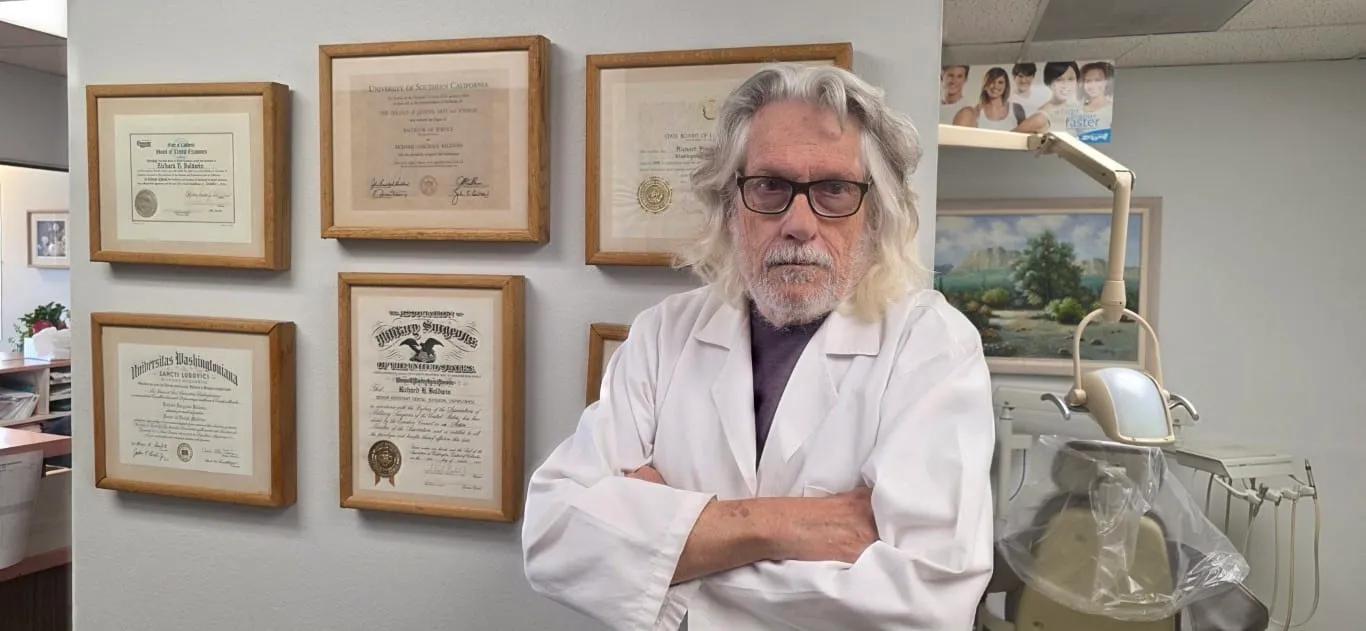
Written and clinically reviewed by Dr. Richard Baldwin, DMD General & cosmetic dentist in Huntington Beach since 1979 · Washington University School of Dental Medicine · Updated
Sources & further reading
- Braces and clear aligners — American Dental Association · MouthHealthy
- Orthodontic treatment for adults and teens — American Association of Orthodontists
- How Invisalign clear aligners work — Align Technology
This guide is general dental information from a practicing dentist, not a diagnosis. Treatment recommendations and costs are confirmed at an in-person exam.
