Jump to a section
If you have a chipped, cracked, or discolored tooth, you have probably come across two popular solutions: dental crowns and veneers. Both can dramatically improve the way your smile looks and feels, but they serve very different purposes. Choosing the wrong one can mean unnecessary tooth reduction, higher costs, or a restoration that does not hold up over time.
Dr. Richard Baldwin has been helping Huntington Beach patients make this decision for decades. Below, he breaks down everything you need to know about dental crowns vs veneers so you can walk into your next appointment with confidence.
If you are weighing cost specifically, our dental crowns cost guide for Huntington Beach breaks down the numbers.
What Is a Dental Crown?
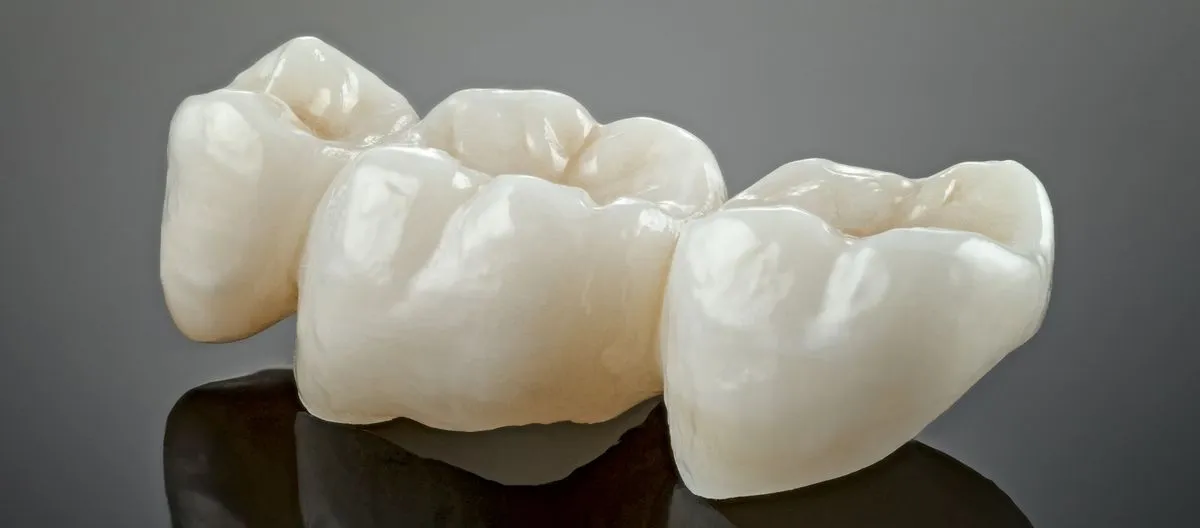
Dental crowns in Huntington Beach are custom tooth-shaped caps that cover the entire visible portion of a tooth, down to the gum line. Think of a crown as a protective helmet for a tooth that has lost significant structure. Crowns restore shape, size, strength, and appearance in one restoration.
Modern crowns are made from porcelain fused to metal, all-ceramic, zirconia, or gold alloy. At HB Dentist we most often recommend all-ceramic or zirconia crowns because they combine durability with a natural appearance. With same-day crown technology, many patients can have their crown designed, milled, and bonded in a single visit.
When Is a Crown Recommended?
Crowns are the right choice when a tooth needs structural reinforcement, not just a cosmetic update. Common situations:
- Large cavities that have destroyed too much structure for a filling to hold
- Cracked or fractured teeth where the crack extends below the chewing surface
- After root canal therapy, because the treated tooth becomes brittle over time
- Severely worn teeth from grinding or acid erosion
- Supporting a dental bridge — crowns on the anchor teeth hold the bridge in place
- Replacing a failing large filling that is breaking down
Because the crown wraps around the entire tooth, it distributes chewing forces evenly and prevents the remaining structure from splitting.
What Is a Dental Veneer?
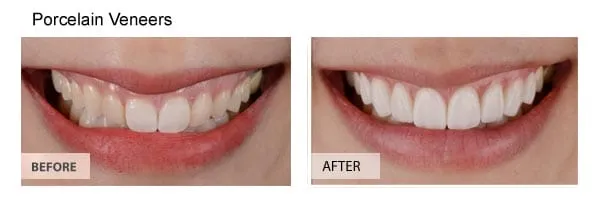
A dental veneer is an ultra-thin shell — usually porcelain or composite resin — bonded to the front surface of a tooth. Unlike a crown, it does not wrap around the back or biting edge. Veneers are primarily cosmetic, designed to change the color, shape, size, or length of teeth that are structurally sound but visually imperfect.
Porcelain is the most popular veneer material because it mimics the light-reflecting qualities of natural enamel and resists staining far better than composite. Learn more about what porcelain veneers cost and their benefits in our dedicated guide.
When Are Veneers Recommended?
Veneers work best when the underlying tooth is healthy but the patient wants to correct cosmetic concerns such as:
- Stubborn discoloration that does not respond to professional whitening
- Minor chips or cracks that are limited to the front surface
- Small gaps between front teeth
- Slight misalignment or unevenness that does not require orthodontics
- Irregularly shaped or undersized teeth that look out of proportion
The key requirement is that enough healthy enamel remains to bond the veneer securely. If the tooth is heavily decayed or weakened, a crown will almost always be the better option.
The Procedure: What to Expect for Each
The Crown Procedure
- Preparation. Dr. Baldwin numbs the area and reshapes the tooth on all sides, removing about 1.5 to 2 millimeters of structure to make room for the crown.
- Impressions or digital scan. A mold or 3D scan of the prepared tooth is taken. With same-day CEREC technology, the crown is designed on screen and milled in-office within about an hour.
- Temporary crown (traditional method). If the crown is lab-fabricated, a temporary protects the tooth for one to two weeks.
- Bonding. The permanent crown is checked for fit, bite, and color, then cemented into place.
The Veneer Procedure
- Preparation. About 0.5 millimeters of enamel is removed from the front surface — far less reduction than a crown requires.
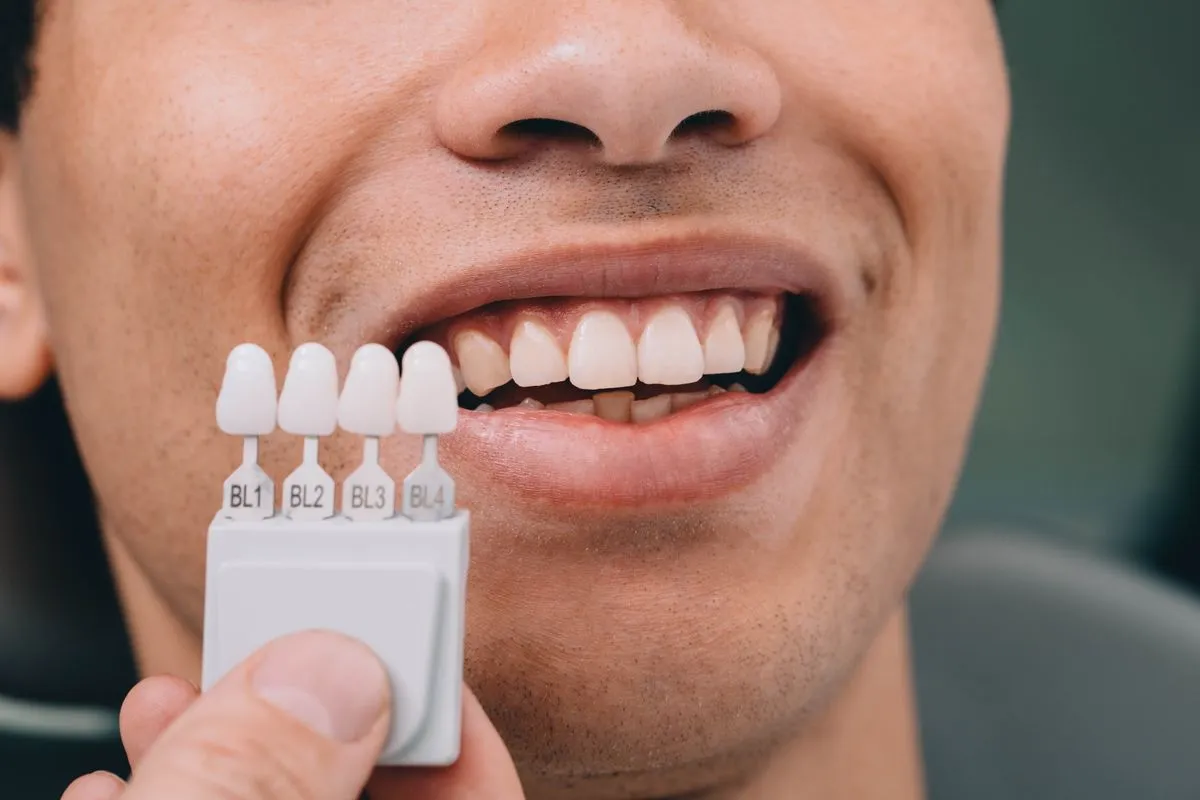
- Impressions. A mold or digital scan captures the exact shape needed. Porcelain veneers are custom-fabricated in a dental lab, typically taking one to two weeks.
- Temporary veneers. Provisional veneers may be placed while you wait for the permanent set.
- Bonding. Each veneer is trial-fitted and the shade verified. A special adhesive cement and curing light permanently bond the veneer to the tooth.
The veneer process generally requires two visits, while a same-day crown can be completed in one. Traditional lab-fabricated crowns also require two visits.
Dental Crowns vs Veneers: Side-by-Side Comparison
| Feature | Dental Crown | Dental Veneer |
|---|---|---|
| Coverage | Entire tooth (360 degrees) | Front surface only |
| Primary purpose | Structural restoration and cosmetics | Cosmetic improvement |
| Tooth reduction | 1.5 — 2 mm all around | 0.3 — 0.5 mm on front surface |
| Material options | Porcelain, zirconia, porcelain-fused-to-metal, gold | Porcelain, composite resin |
| Typical lifespan | 10 — 15+ years | 10 — 15+ years |
| Number of visits | 1 (same-day) or 2 (lab-fabricated) | 2 |
| Average cost per tooth | $800 — $2,000 | $1,000 — $2,500 |
| Insurance coverage | Often covered when medically necessary | Rarely covered (considered cosmetic) |
| Best for | Damaged, weakened, or heavily restored teeth | Healthy teeth with cosmetic flaws |
| Reversible? | No | No (enamel is permanently removed) |
Cost Breakdown: Crowns vs Veneers
In Huntington Beach, a dental crown generally costs between $800 and $2,000 per tooth depending on material and complexity. Insurance plans frequently cover a portion of crown costs when the crown is medically necessary, such as after a root canal or to repair a fracture.
Porcelain veneers typically range from $1,000 to $2,500 per tooth. Because veneers are classified as cosmetic dentistry, most insurance plans do not cover them. Many patients place veneers on multiple front teeth at once for a uniform smile, so the total investment can add up.
At HB Dentist, we offer flexible payment plans and financing to help make either treatment accessible. During your consultation, we provide a detailed cost estimate so there are no surprises.
Durability and Long-Term Care
Both crowns and veneers are built to last 10 to 15 years or longer with proper care. The habits that protect your investment are the same regardless of which restoration you choose:
- Brush twice daily with a soft-bristled toothbrush and fluoride toothpaste
- Floss every day, paying attention to the gum line around the restoration
- Avoid biting hard objects like ice, pen caps, or hard candy
- Wear a night guard if you grind your teeth
- Keep up with regular checkups so Dr. Baldwin can monitor the restoration early
Crowns tend to be more resilient under heavy biting forces because of their full-coverage design, which is why they are the standard for back teeth. Veneers perform beautifully on front teeth where forces are lower and aesthetics are the top priority.
Pros and Cons at a Glance
Dental Crown Pros
- Restores both strength and appearance
- Protects a weakened tooth from further damage
- Can be completed in one visit with same-day technology
- Wide range of material choices
- Insurance often helps with the cost
Dental Crown Cons
- Requires more tooth reduction than a veneer
- Irreversible once the tooth is reshaped
- Unnecessary if the tooth is structurally healthy
Dental Veneer Pros
- Minimal preparation preserves more natural enamel
- Exceptional cosmetic results that look natural
- Stain-resistant porcelain surface
- Corrects multiple cosmetic issues at once
Dental Veneer Cons
- Does not add structural strength
- Not suitable for teeth with significant decay or damage
- Typically not covered by insurance
- Can chip under excessive force
How Dr. Baldwin Helps You Decide
The choice between a crown and a veneer is not one-size-fits-all. During your consultation, Dr. Baldwin evaluates the health of each tooth, reviews digital X-rays, listens to your cosmetic goals, and discusses your budget. Sometimes the answer is clearly one or the other. Other times, a combination works best — for example, a crown on a molar that had a root canal and veneers on the front teeth.
What matters most is that the restoration matches the need. A veneer on a tooth that really needs a crown will not hold up, and a crown on a perfectly healthy tooth removes more enamel than necessary. The right recommendation from an experienced dentist saves you time, money, and discomfort.
Schedule Your Consultation at HB Dentist
Whether you need a damaged tooth protected or front teeth refreshed, Dr. Baldwin and the team at HB Dentist are here to help. With more than four decades of experience in Huntington Beach, we combine clinical expertise with genuine patient comfort.
Call us today at (714) 536-2571 or request an appointment online to discuss whether a crown, veneers, or a combination of both is the best path to your healthiest, most confident smile.
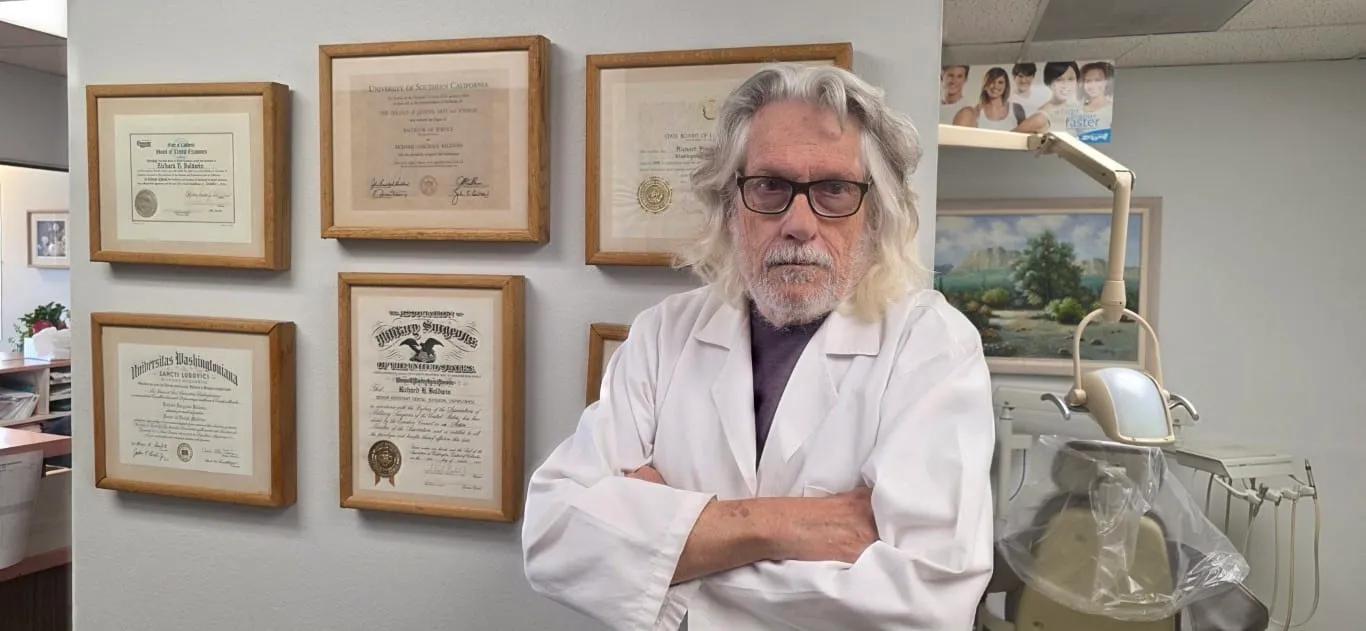
Written and clinically reviewed by Dr. Richard Baldwin, DMD General & cosmetic dentist in Huntington Beach since 1979 · Washington University School of Dental Medicine · Updated
Sources & further reading
- Veneers — American Dental Association · MouthHealthy
- Whitening: what patients should know — American Dental Association
This guide is general dental information from a practicing dentist, not a diagnosis. Treatment recommendations and costs are confirmed at an in-person exam.