Jump to a section
- A Quick Overview of Each Option
- Dental Implants vs Dentures: A Detailed Comparison
- Side-by-Side Comparison Table
- Who Is a Good Candidate for Dental Implants?
- Who Is a Good Candidate for Dentures?
- When One Option Is Clearly Better
- Can You Switch from Dentures to Implants Later?
- Take the Next Step with Confidence
Losing teeth changes more than your smile — it changes the way you eat, speak, and over time the very shape of your face. If you are weighing your options, you have likely landed on the same two choices most of my patients consider: dental implants vs dentures.
Both are legitimate treatments, but they differ in how they work, how they feel, and what they cost over a lifetime. I am Dr. Richard Baldwin, DMD, and after decades of restoring implants and fitting dentures here in Huntington Beach, I want to help you make the choice that genuinely fits your life.
A Quick Overview of Each Option
What Are Dental Implants?
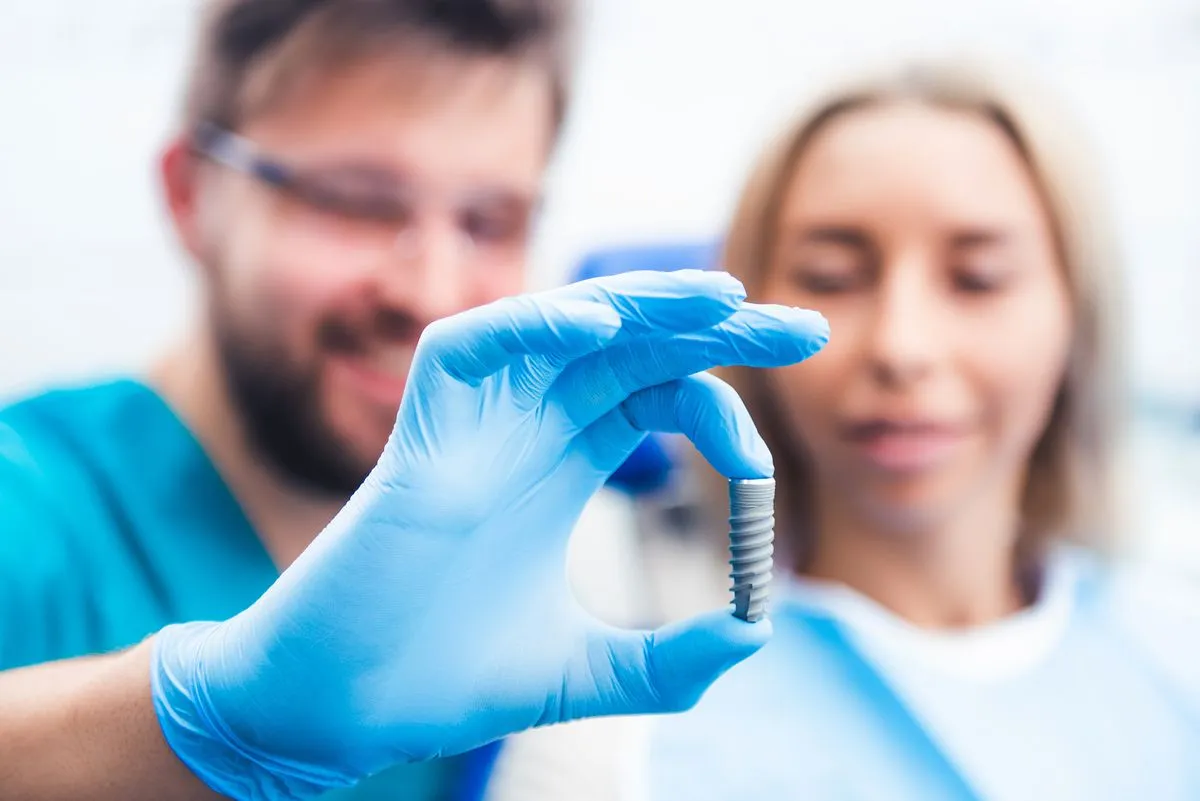
A dental implant is a titanium post surgically placed into the jawbone. Over three to six months, the bone fuses around the post (osseointegration), creating an anchor as stable as a natural tooth root. A custom crown, bridge, or full-arch prosthesis is then attached.
Because the implant lives inside the bone, it stimulates the jaw the same way a natural root does — keeping bone healthy and preventing the facial collapse that long-term denture wearers experience. Implants can replace a single tooth, several teeth, or an entire arch. For patients missing all their teeth, All-on-4 dental implants use four strategically angled posts to support a complete set of fixed teeth.
What Are Removable Dentures?
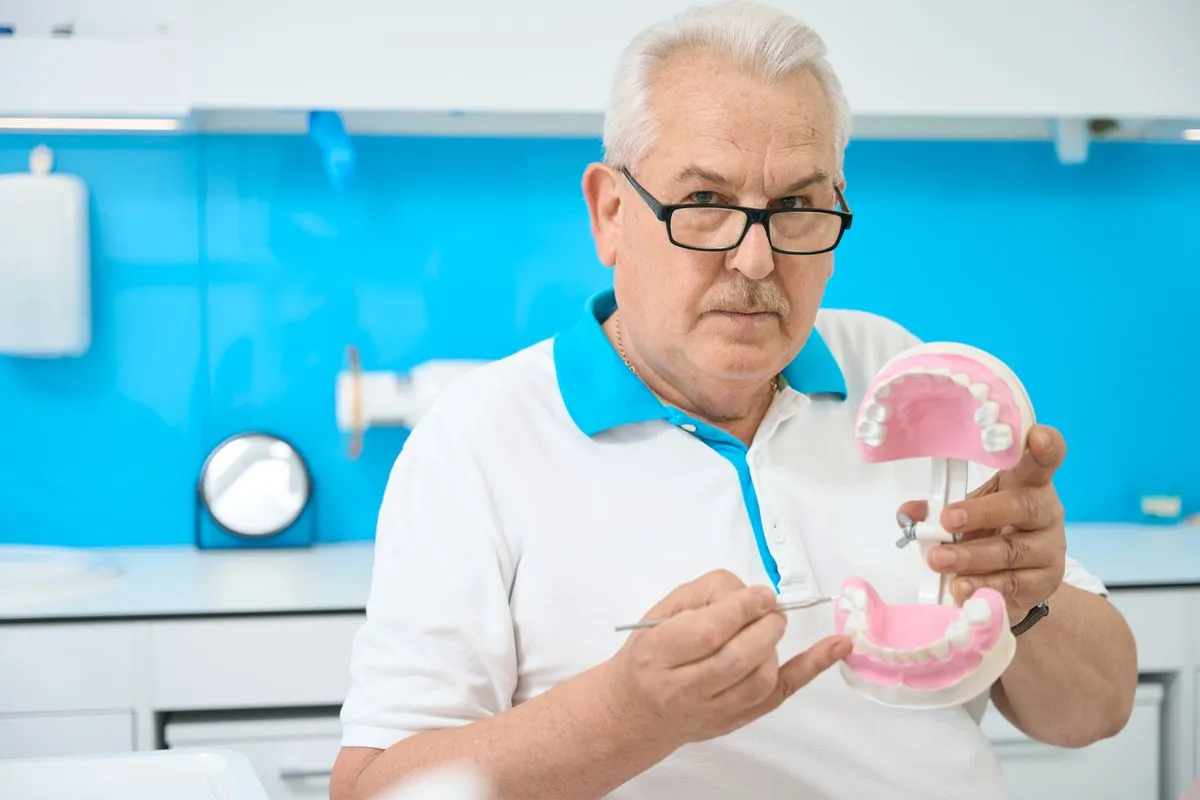
Dentures in Huntington Beach at our office are prosthetic teeth set into an acrylic or metal-and-acrylic base that rests on the gums. A full denture replaces every tooth in an arch, while a partial denture fills gaps and clips onto remaining natural teeth for support.
Modern dentures look realistic, require no surgery, can be fabricated quickly, and have the lowest upfront cost of any tooth-replacement method.
The trade-off: dentures sit on top of the gums rather than inside the bone. They rely on suction, adhesive, or clasps for retention. Because they do not transmit chewing forces into the jawbone, the bone gradually resorbs — which is why dentures loosen and need periodic relining or replacement.
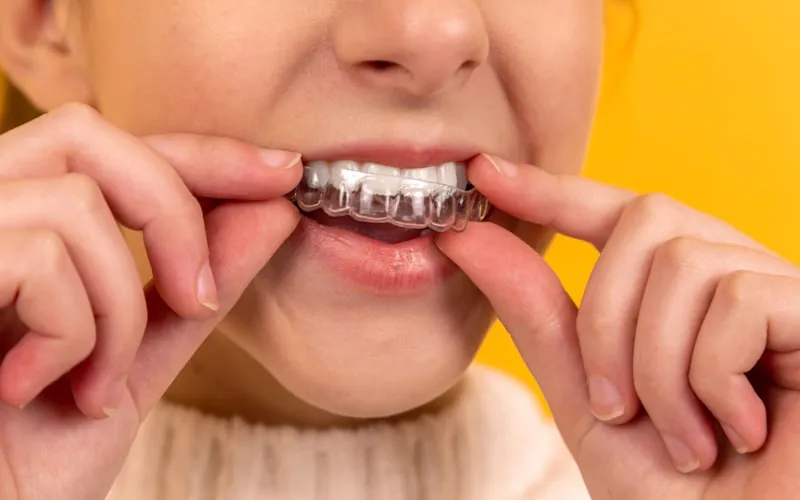
For local pricing on every denture type, see our dentures cost guide for Huntington Beach.
Dental Implants vs Dentures: A Detailed Comparison
Choosing between implants and dentures comes down to several factors. Here is where the two options diverge.
Function and Chewing Ability
Natural teeth generate roughly 200 to 250 pounds of biting force. Dental implants restore close to 100 percent of that because they are anchored in bone — apples, steaks, corn on the cob are all fair game.
Dentures restore only about 25 to 50 percent of natural chewing force. Hard and sticky foods become difficult, and many denture wearers gradually shift toward softer diets, which can affect nutrition.
Comfort and Stability
Implants feel like your own teeth — no slipping, no sore spots, no bulky palate coverage. Most patients forget the implant is there.
Dentures can feel comfortable when new, but comfort declines as the ridge resorbs. Upper dentures cover the palate, dulling taste. Lower dentures are notoriously less stable because the tongue and floor of the mouth limit suction.
Bone Health and Facial Structure
When a tooth is extracted and nothing replaces the root, the jawbone shrinks. Studies show the ridge can lose 25 percent of its width in the first year alone, continuing for decades.
Implants halt that process. The titanium post transfers chewing forces into the bone just like a natural root, so the bone is maintained and facial contours stay intact.
Dentures do not prevent bone loss — in fact, the pressure on the ridge can accelerate it. That is why dentures that fit perfectly on day one become loose within a few years.
Longevity and Durability
The titanium implant post can last a lifetime; the crown on top typically lasts 10 to 20 years. For more detail, see how long dental implants last.
Conventional dentures last five to seven years before needing replacement, with relines every one to two years. Over 20 years, a denture wearer may go through three or four sets plus multiple relines.
Daily Maintenance
Implants are maintained just like natural teeth: brushing, flossing, and regular dental checkups. No removal, no soaking, no adhesive.
Dentures must be removed every night, cleaned with a denture brush, and soaked in a cleansing solution. The mouth needs to be cleaned before reinserting. While manageable, this routine adds time that many patients wish they could avoid.
Cost
A single dental implant in Huntington Beach typically costs $3,000 to $5,000 including the post, abutment, and crown. Full-arch solutions like All-on-4 range higher. For a full breakdown, see our guide to dental implant costs in Huntington Beach.
Conventional dentures cost $1,000 to $3,000 per arch upfront, but factor in relines, adhesive, and replacement every five to seven years and the lifetime cost often approaches or exceeds implants.
Appearance
Premium dentures look natural initially, but as bone loss progresses denture wearers notice thinning lips, a receding chin, and deepening facial folds.
Implant restorations look equally natural and, because they preserve bone, the facial structure stays stable over time.
Side-by-Side Comparison Table
| Factor | Dental Implants | Removable Dentures |
|---|---|---|
| Chewing force | ~95-100% of natural teeth | ~25-50% of natural teeth |
| Bone preservation | Yes — stimulates the jawbone | No — bone loss continues |
| Longevity | Post: lifetime; crown: 10-20 yrs | 5-7 years per set |
| Daily removal | No | Yes — must be removed nightly |
| Surgery required | Yes — minor oral surgery | No |
| Upfront cost | Higher ($3,000-$5,000 per tooth) | Lower ($1,000-$3,000 per arch) |
| Long-term cost (20 yrs) | Often lower overall | Higher when replacements are included |
| Taste affected | No | Upper dentures cover palate, dulling taste |
| Adhesive needed | No | Often yes, especially over time |
| Facial structure | Maintained | Gradually deteriorates |

Who Is a Good Candidate for Dental Implants?
Most adults with missing teeth are candidates, but you need adequate jawbone density (or willingness to undergo grafting) and healthy gums free of active periodontal disease. Uncontrolled diabetes, heavy smoking, and certain medications can complicate healing, though they do not always rule implants out.
Patients told they lack bone should know that modern techniques — including zygomatic implants and All-on-4 — can often provide solutions without extensive grafting. A 3D imaging evaluation is the only way to know for certain.
Who Is a Good Candidate for Dentures?
Dentures are a practical choice when surgery is not an option due to medical conditions, medications like bisphosphonates, or personal preference. They also work as a starting point for patients not yet ready for the financial commitment of implants.
Partial dentures suit patients missing several teeth who still have healthy anchoring teeth. Complete dentures serve those who have lost all teeth and prefer a non-surgical path.
When One Option Is Clearly Better
In my experience, there are situations where the choice is straightforward:
Implants are clearly better when a patient has adequate bone, is in good health, and values unrestricted eating, confident speaking, and zero daily removal. Younger patients especially benefit because implants prevent decades of bone loss.
Dentures are clearly better when surgery is inadvisable due to medical conditions, when the jawbone has deteriorated beyond what implant techniques can address, or when a patient needs an immediate lower-cost solution.
For many patients, the answer is a combination. Implant-supported overdentures use two to four implants to snap a denture into place — far better stability than a conventional denture without the full cost of a fixed restoration.
Can You Switch from Dentures to Implants Later?
Yes — many of my patients have done exactly that. Some start with dentures out of financial necessity or because they need teeth immediately after extractions, then transition to implants later.
The caveat: the longer you wear dentures, the more bone you lose. Wait too long and you may need grafting before implants can be placed. If implants are your eventual goal, have the conversation early so we can preserve bone.
A popular middle ground is placing two to four implants beneath an existing denture to convert it into a snap-in overdenture — better stability at a fraction of the cost of a full fixed restoration.
Take the Next Step with Confidence
There is no single right answer for everyone. The best option fits your health, your goals, and your budget. After decades I can tell you: patients who do best are the ones who understand their options before committing.
At HB Dentist, we offer complimentary implant consultations that include a full examination and, when needed, 3D imaging — so we can give you honest, specific guidance rather than generalities.
Call us at (714) 536-2571 or request an appointment online to schedule your consultation at our Huntington Beach office. Whether implants, dentures, or a combination turns out to be your best path, we will make sure you understand every option before you decide.
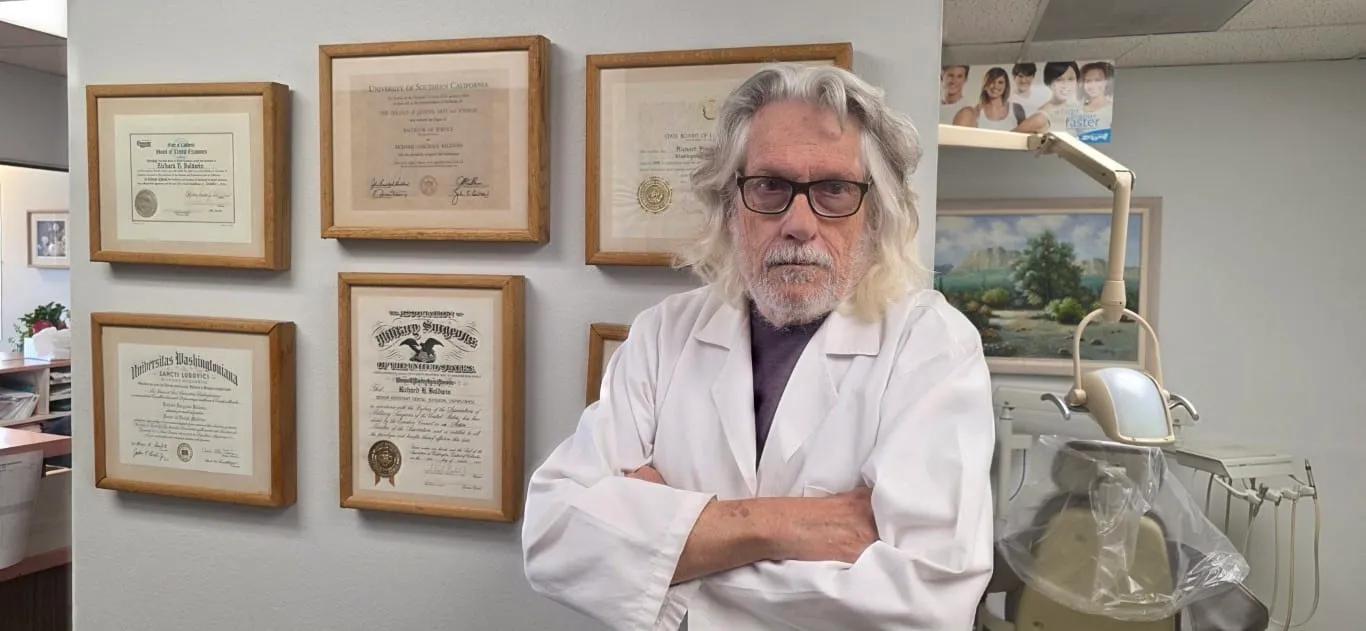
Written and clinically reviewed by Dr. Richard Baldwin, DMD General & cosmetic dentist in Huntington Beach since 1979 · Washington University School of Dental Medicine · Updated
Sources & further reading
- Dental implants — American Dental Association · MouthHealthy
- Dental implant surgery — American Association of Oral and Maxillofacial Surgeons
- Gum disease and implant health — American Academy of Periodontology
This guide is general dental information from a practicing dentist, not a diagnosis. Treatment recommendations and costs are confirmed at an in-person exam.