Jump to a section
If you have ever worried about the freshness of your breath during a conversation, you are not alone. Bad breath — known clinically as halitosis — is one of the most common concerns patients bring up in our Huntington Beach dental office. Roughly 25 to 30 percent of adults deal with chronic bad breath at some point, yet few feel comfortable talking about it.
After decades of practicing dentistry in Huntington Beach, I want you to know: bad breath is a medical issue, not a character flaw. It almost always has an identifiable cause, and the solution is usually straightforward.
Why Bad Breath Is So Common
Occasional bad breath after coffee or a garlicky meal is completely normal. Chronic halitosis is different — it lingers regardless of what you have eaten and returns even after brushing. Research estimates that about one in four adults struggles with persistent bad breath, a number that likely understates reality since many people are too embarrassed to mention it.
The good news: the vast majority of cases originate inside the mouth, which means your dentist is the right person to help.
Oral Causes of Bad Breath
Bacteria Buildup
Your mouth hosts hundreds of bacterial species. Most are harmless, but anaerobic bacteria that thrive between teeth and below the gumline produce volatile sulfur compounds (VSCs) as they break down food particles and dead cells. These compounds are the primary source of bad-breath odor. Without consistent oral hygiene, bacterial colonies multiply and the smell intensifies.
Gum Disease
Periodontal disease is one of the most frequent — and most overlooked — bad breath causes. When plaque hardens into tartar along the gumline, it creates pockets where bacteria accumulate unchecked. The deeper those pockets grow, the stronger the odor gets. If you have noticed bleeding, swelling, or tenderness in your gums alongside persistent bad breath, read our guide on gum disease signs and schedule an evaluation.
Tongue Coating
If you see a white or yellowish film on the back of your tongue, that coating is a dense layer of bacteria, food debris, and dead cells. The rough surface of the tongue — particularly the back third — is the single largest reservoir of odor-causing bacteria in the mouth. Studies show that tongue cleaning alone can reduce VSC levels by 30 to 75 percent, yet most people skip this step entirely.

Dry Mouth
Saliva is your body’s natural rinse cycle — it washes away food particles, neutralizes acids, and delivers antimicrobial proteins that keep bacteria in check. When saliva production drops (xerostomia), bacteria flourish. Dry mouth can result from mouth breathing, medications, autoimmune conditions, or simply not drinking enough water. If your mouth frequently feels sticky or parched, dry mouth may be a significant contributor to your bad breath.
Untreated Cavities and Old Dental Work
A cavity is a hole in your tooth where bacteria produce odor continuously — no amount of brushing will eliminate it without professional treatment. Similarly, failing restorations like cracked fillings or poorly fitting crowns can trap food and bacteria in spaces impossible to clean on your own.
Non-Oral Causes of Bad Breath
While 80 to 90 percent of halitosis cases begin in the mouth, the source sometimes lies elsewhere.
Sinus and Respiratory Issues
Chronic sinus infections, post-nasal drip, and tonsil stones can all produce foul-smelling discharge that contributes to bad breath. If your halitosis comes with nasal congestion, a feeling of mucus in the back of your throat, or visible lumps on your tonsils, a visit to your physician or ENT specialist may be warranted alongside dental care.
Acid Reflux (GERD)
Gastroesophageal reflux disease allows stomach acids to travel back up the esophagus, carrying odors with them. The acid can also damage tooth enamel over time, creating yet another environment for bacteria to thrive. Patients with GERD-related bad breath often describe a sour or acidic taste in addition to the odor.
Medications
Hundreds of commonly prescribed medications list dry mouth as a side effect — antihistamines, antidepressants, blood pressure medications, and diuretics can all reduce saliva flow. If you started a new medication and noticed a change in your breath, do not stop taking it. Instead, let your prescribing doctor and dentist know so we can manage the dry mouth proactively.
The “Cupped Hands” Test Is Not Reliable
You may have tried breathing into your cupped hands and sniffing to check your breath. Unfortunately, this rarely works. Your nose adapts quickly to your own odors through olfactory fatigue, giving most people a false sense of security.
A more reliable at-home method is to lick the inside of your wrist with the back of your tongue, wait ten seconds for it to dry, and then smell the area. That said, the only truly accurate assessment comes from professional evaluation.
How Your Dentist Diagnoses Bad Breath
In our office, a halitosis evaluation starts with a thorough oral exam. We check for gum disease, cavities, failing restorations, tongue coating, and dry mouth, and review your medical history. In many cases, the cause becomes clear during this initial visit.
For complex situations, we can measure volatile sulfur compound levels in your breath with specialized instruments. If we suspect a non-oral cause, we refer you to the appropriate specialist while continuing to manage the dental component.
Treatment Based on the Cause
Effective treatment depends entirely on the cause. There is no single solution that works for everyone, which is why proper diagnosis matters.
For Bacterial Buildup and Poor Hygiene
A professional cleaning removes plaque and tartar that home care cannot reach. From there, we help you refine your brushing and flossing technique. Our guide on how to brush properly covers the fundamentals in detail.
For Gum Disease
Mild gingivitis often resolves with improved home care and a professional cleaning. More advanced periodontal disease may require a deep cleaning (scaling and root planing), which removes bacteria and tartar from below the gumline and smooths root surfaces so gums can reattach. Many patients notice a dramatic improvement in their breath within weeks.
For Dry Mouth
Managing dry mouth involves increasing water intake, using alcohol-free mouth rinses, chewing sugar-free gum to stimulate saliva, and sometimes prescribing saliva substitutes. We also review your medications to identify any that may be contributing.
For Cavities and Failing Restorations
The fix is straightforward: treat the cavity or replace the restoration. Once the bacterial reservoir is eliminated, the odor resolves.
For Non-Oral Causes
If our evaluation points to a cause outside the mouth, we coordinate with your physician to address the underlying condition while continuing to manage your oral health in parallel.
Your Daily Prevention Routine
Preventing bad breath comes down to keeping bacteria under control and maintaining a healthy oral environment. Here is a daily routine that covers the essentials:
- Brush twice a day for two full minutes. Use a soft-bristled toothbrush and fluoride toothpaste, paying attention to the gumline and inside surfaces.
- Floss once a day. Brushing alone cleans about 60 percent of tooth surfaces. Flossing reaches bacteria hiding between teeth.
- Clean your tongue. Use a tongue scraper or your toothbrush to clean from back to front every time you brush.
- Stay hydrated. Drink water throughout the day, especially if you take medications that cause dry mouth.
- Choose sugar-free gum. Sugar-free options stimulate saliva without feeding decay-causing bacteria.
- Limit alcohol-based mouthwash. Alcohol rinses can dry out your mouth over time. Choose alcohol-free formulas with cetylpyridinium chloride or chlorine dioxide.
- Avoid tobacco. Smoking and chewing tobacco dry out the mouth, promote gum disease, and add their own persistent odor.

When to See a Dentist About Bad Breath
You should schedule an appointment if any of the following apply:
- Bad breath persists despite consistent brushing, flossing, and tongue cleaning
- You notice bleeding, swollen, or receding gums
- You have a persistent bad taste in your mouth
- You have not had a dental cleaning in more than six months
- Someone close to you has mentioned your breath
Many patients wait too long out of embarrassment. Please do not let that hold you back — we discuss bad breath every day in our office, and there is nothing to be ashamed of. If it has been a while since your last visit, our post on how often you should visit the dentist can help you decide on the right schedule.
Get Fresh Breath That Lasts
Bad breath does not have to be something you manage with mints and worry. A proper diagnosis and targeted treatment can resolve the issue at its source. At our Huntington Beach dental office, Dr. Richard Baldwin and the HB Dentist team are here to help — without judgment and with decades of experience.
Call us at (714) 536-2571 or request an appointment online to schedule your evaluation. Let us find the cause and fix it together.
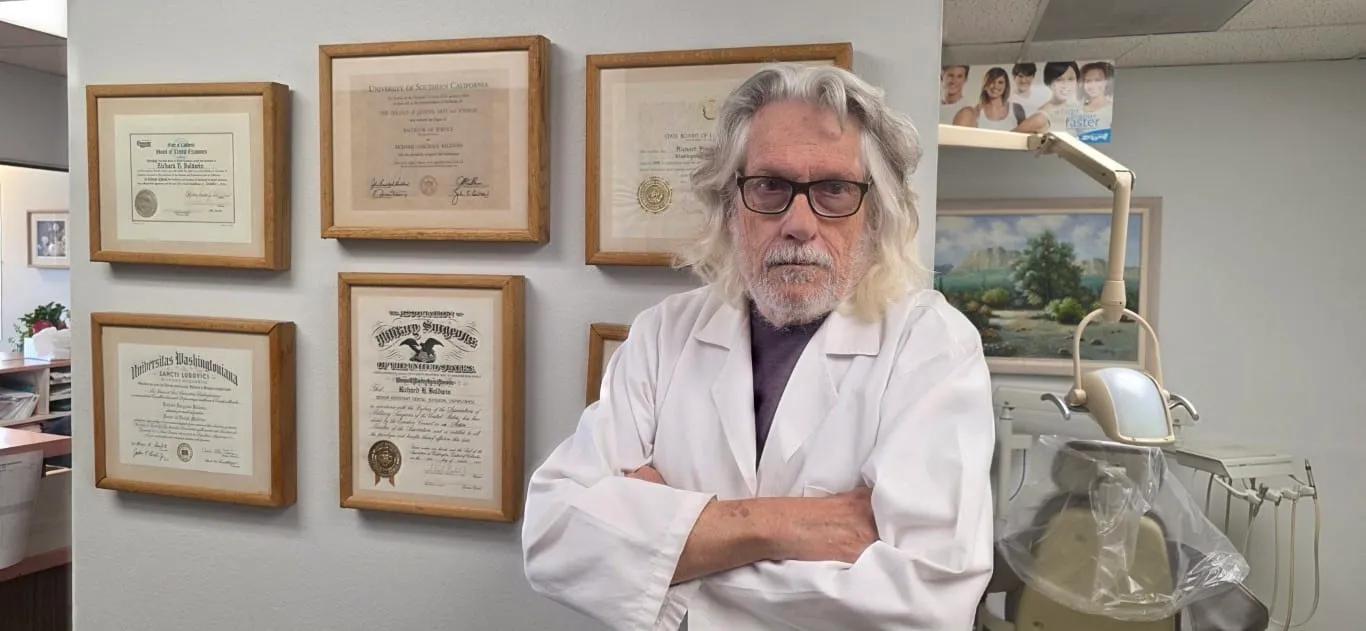
Written and clinically reviewed by Dr. Richard Baldwin, DMD General & cosmetic dentist in Huntington Beach since 1979 · Washington University School of Dental Medicine · Updated
Sources & further reading
- Brushing your teeth — American Dental Association · MouthHealthy
- Flossing — American Dental Association · MouthHealthy
- Dental X-rays — American Dental Association · MouthHealthy
- Tooth decay — National Institute of Dental and Craniofacial Research (NIH)
This guide is general dental information from a practicing dentist, not a diagnosis. Treatment recommendations and costs are confirmed at an in-person exam.