Jump to a section
- What Is a Deep Cleaning?
- How Deep Cleaning Differs from Regular Cleaning
- When Is a Deep Cleaning Necessary?
- The Deep Cleaning Procedure Step by Step
- Does a Deep Cleaning Hurt?
- Recovery After a Deep Cleaning
- Deep Cleaning Cost and Insurance Coverage
- How to Prevent Needing a Deep Cleaning
- Protect Your Smile — Schedule Your Evaluation Today
If your dentist just told you that you need a deep cleaning, you are probably wondering what that means and whether it is really necessary. You are not alone. Many patients hear “deep cleaning teeth” for the first time and feel caught off guard.
I am Dr. Richard Baldwin, DMD, and as a dentist with decades of experience in Huntington Beach, I want to reassure you: a deep cleaning is one of the most common and effective treatments we perform. It can save your teeth and reverse gum disease damage. Below, I cover everything you need to know.
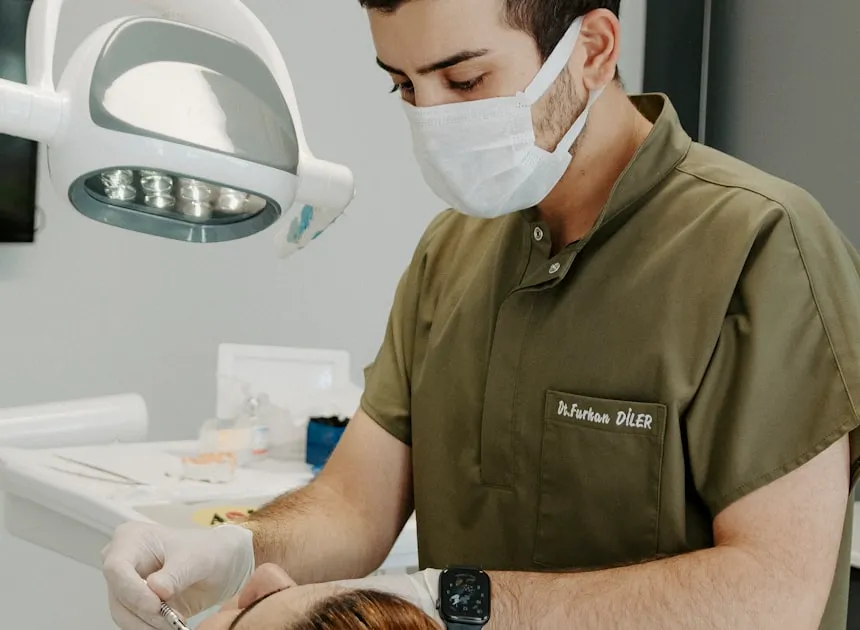
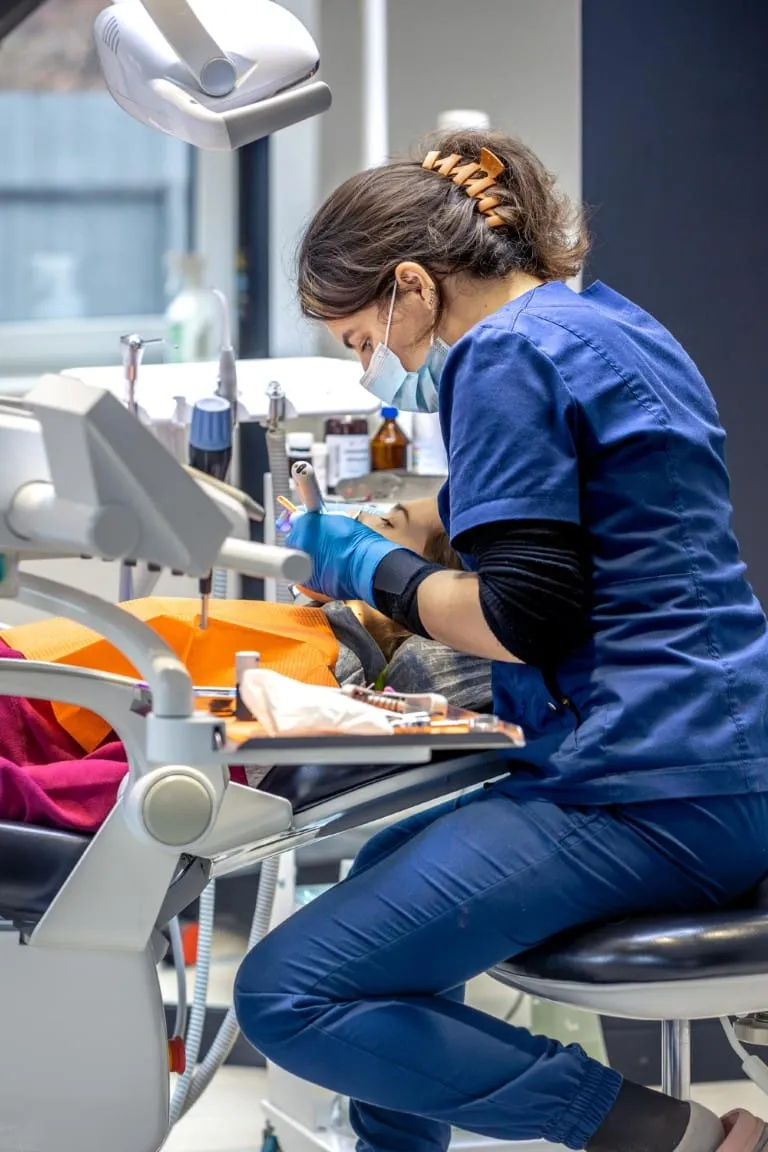
Deep cleaning is the core of our gum disease treatment at our Huntington Beach office.
What Is a Deep Cleaning?
A deep cleaning — known clinically as scaling and root planing — is a non-surgical periodontal treatment that removes bacteria, plaque, and hardened tartar (calculus) from beneath your gum line. Unlike a standard cleaning that focuses above the gums, a deep cleaning reaches into the pockets that form between your teeth and gum tissue when gum disease is present.
The procedure has two parts:
- Scaling removes plaque and calculus deposits from the tooth surfaces both above and below the gum line, including the bottom of periodontal pockets.
- Root planing smooths the root surfaces of your teeth so bacteria cannot cling to them as easily, helping gum tissue heal and reattach snugly to the tooth.
Together, these steps eliminate the bacterial colonies driving the infection and create the conditions your gums need to recover.

How Deep Cleaning Differs from Regular Cleaning
The key difference: a regular cleaning is preventive maintenance for healthy gums, while a deep cleaning is a therapeutic treatment for gums that are already diseased.
| Regular Cleaning (Prophylaxis) | Deep Cleaning (Scaling & Root Planing) | |
|---|---|---|
| Purpose | Preventive maintenance | Treatment of gum disease |
| Where it cleans | Above the gum line and just at the gum margin | Above and below the gum line, into periodontal pockets |
| Pocket depths | Healthy (1-3 mm) | Diseased (4 mm or deeper) |
| Anesthesia | Not required | Local anesthesia used for comfort |
| Number of visits | One appointment | Usually two appointments (one per side) |
| Typical duration | 30-45 minutes | 45-60 minutes per appointment |
| Frequency | Every 6 months | As needed, followed by periodontal maintenance visits |
| Insurance classification | Preventive | Medically necessary therapeutic procedure |
When pockets deepen beyond 3 mm, a standard cleaning cannot reach the bacteria and tartar hiding below the gum line. Performing a regular cleaning on someone with active periodontal disease would leave the infection untreated — like mopping around a leak instead of fixing the pipe.
When Is a Deep Cleaning Necessary?
Your dentist recommends a deep cleaning when a periodontal evaluation shows gum disease beyond gingivitis. We measure pocket depth around each tooth with a periodontal probe. Healthy gums measure 1 to 3 millimeters; pockets of 4 millimeters or deeper mean bone and tissue support is breaking down.
Other indicators include:
- Bleeding gums when you brush or floss, one of the earliest signs of gum disease
- Red, swollen, or tender gum tissue that does not improve with better home care
- Persistent bad breath that mouthwash cannot resolve, caused by bacteria in deep pockets
- Gum recession, where tissue has pulled away from teeth and exposed root surfaces
- Bone loss visible on X-rays, meaning the infection has reached deeper supporting structures
- Loose or shifting teeth, which can occur as bone loss progresses
Patients who have gone years without a visit are often surprised by this diagnosis. Tartar builds up silently beneath the gums, and by the time symptoms appear, the disease may be moderate. That is why regular visits matter — catching gum disease early means simpler, less costly treatment.
The Deep Cleaning Procedure Step by Step
Knowing what will happen removes much of the anxiety. Here is what to expect:
Step 1: Evaluation and Treatment Planning
We review your X-rays and periodontal charting, discuss findings, and plan which areas need treatment. If both sides of your mouth are affected, we typically schedule two appointments so each side receives thorough attention.
Step 2: Numbing the Area
We apply a local anesthetic so you stay comfortable throughout. You will feel pressure but should not feel pain. If you experience dental anxiety, let us know — we have options to help you relax.
Step 3: Scaling
Using ultrasonic instruments and hand scalers, we remove all plaque and tartar above and below the gum line. Ultrasonic scalers use vibrations and water spray to break apart hardened deposits, while hand instruments reach difficult areas precisely.
Step 4: Root Planing
We smooth the root surfaces so bacteria cannot accumulate on them, encouraging pockets to shrink as gums recover and reattach.
Step 5: Irrigation
We irrigate the pockets to flush out remaining debris. In some cases, we place a locally applied antibiotic into the deepest pockets to support healing.
Step 6: Follow-Up
Four to six weeks later, we re-measure your pockets. Most patients see significant improvement — pockets shrink, bleeding subsides, and gum tissue looks healthier.
Does a Deep Cleaning Hurt?
Very little. Because we use local anesthesia, the procedure itself should be comfortable. Most patients describe the sensation as pressure rather than pain.
Afterward, some tenderness and sensitivity to hot and cold are normal for a few days to a week. Over-the-counter ibuprofen is usually sufficient. Compared to leaving gum disease untreated — which leads to worsening pain, tooth loss, and more invasive procedures — a deep cleaning is a far gentler path.
Recovery After a Deep Cleaning
Most patients return to normal activities the same day. To help your gums heal smoothly:
- Brush gently with a soft-bristled toothbrush. Review our guide on how to brush your teeth properly if you are unsure about technique.
- Rinse with warm salt water (half a teaspoon in eight ounces of water) two to three times daily for the first few days.
- Avoid hard, crunchy, or spicy foods for 48 hours after each appointment.
- Do not smoke. Tobacco slows healing and increases the risk of reinfection.
- Take prescribed medications as directed, including any antibiotics.
- Expect minor bleeding when brushing for a day or two. It should decrease quickly.
Sensitivity to temperature is the most common post-treatment complaint, but it resolves as your gums heal. If you experience severe pain, heavy bleeding, or worsening swelling after two days, call our office right away.

Deep Cleaning Cost and Insurance Coverage
Cost is calculated per quadrant (your mouth has four: upper right, upper left, lower right, lower left). In the Huntington Beach area, expect $200 to $400 per quadrant depending on severity.
Most dental insurance plans classify scaling and root planing as medically necessary and cover 70 to 80 percent. Your out-of-pocket expense may be modest, especially when fewer quadrants need treatment. For details on how plans work, see our dental insurance guide.
HB Dentist accepts most major insurance providers and offers payment plans for remaining balances. We never want cost to delay treatment — the longer gum disease goes untreated, the more extensive and expensive the care becomes.
How to Prevent Needing a Deep Cleaning
Prevention is always better than treatment. Gum disease is largely preventable with consistent daily habits and regular professional care:
- Brush twice a day for two minutes with a soft-bristled or electric toothbrush, focusing on the gum line where plaque accumulates first.
- Floss daily. Brushing alone misses about 35 percent of tooth surfaces.
- Do not skip dental visits. Professional cleanings every six months remove tartar before it migrates below the gum line. With a history of gum disease, your dentist may recommend every three to four months.
- Quit tobacco. Smokers are significantly more likely to develop periodontal disease, and it progresses faster.
- Eat a balanced diet. Vitamins C and D support gum tissue integrity and healing.
- Watch for warning signs. Bleeding gums, persistent bad breath, or red and puffy tissue are signals to schedule an appointment. Review the early signs of gum disease so you know what to look for.
The patients who rarely need more than a routine cleaning are the ones who stay consistent with brushing, flossing, and appointments.
Protect Your Smile — Schedule Your Evaluation Today
If you have been told you need a deep cleaning, or if it has been a while since your last visit, do not put it off. Gum disease does not improve on its own, and early treatment can prevent tooth loss and protect your overall health.
At HB Dentist, we have been caring for Huntington Beach families for decades. We will explain your options clearly, keep you comfortable, and help you build a plan to keep your gums healthy for the long term.
Call us at (714) 536-2571 or request an appointment online to schedule your periodontal evaluation.
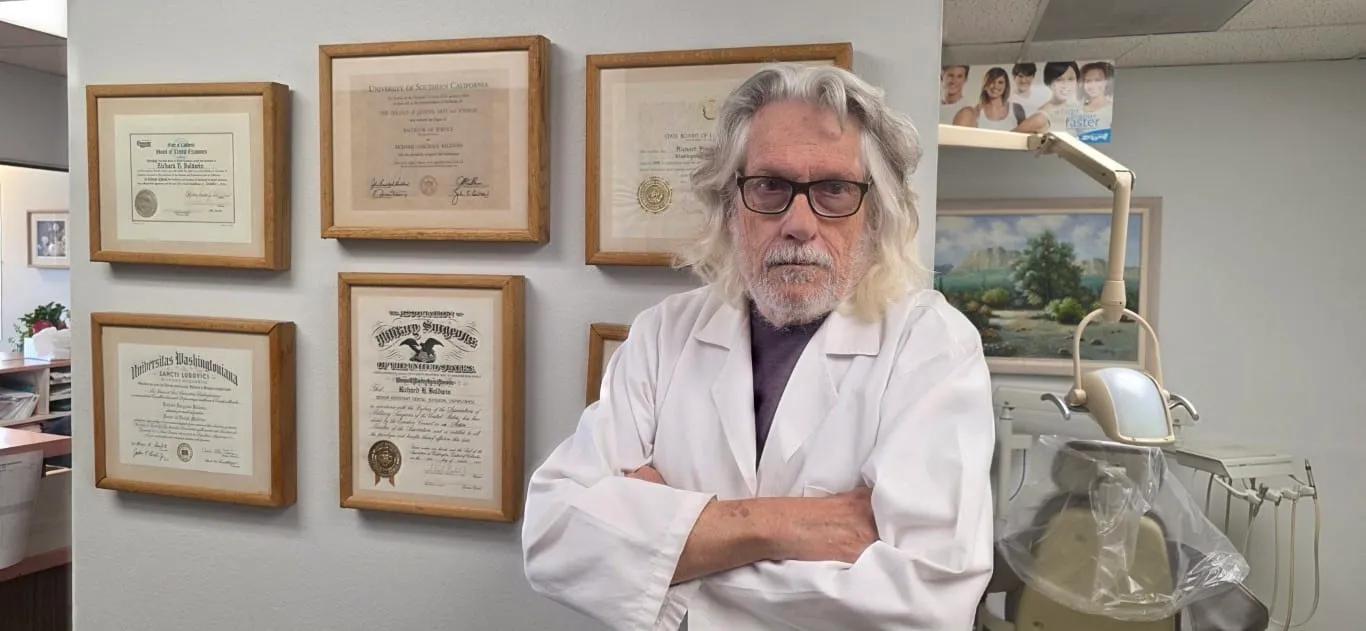
Written and clinically reviewed by Dr. Richard Baldwin, DMD General & cosmetic dentist in Huntington Beach since 1979 · Washington University School of Dental Medicine · Updated
Sources & further reading
- Periodontal (gum) disease — National Institute of Dental and Craniofacial Research (NIH)
- Gum disease — American Dental Association · MouthHealthy
- Periodontal treatments and procedures — American Academy of Periodontology
This guide is general dental information from a practicing dentist, not a diagnosis. Treatment recommendations and costs are confirmed at an in-person exam.