Jump to a section
- Dental Anxiety Is Far More Common Than You Think
- Understanding What Causes Dental Anxiety
- How We Help Anxious Patients at HB Dentist
- A Straight Answer About Sedation
- Practical Tips for Managing Dental Anxiety Before and During Your Visit
- Facing the Procedures You Fear Most
- You Deserve Care That Feels Safe
If the thought of sitting in a dental chair makes your heart race or your palms sweat, I want you to know something right away: there is absolutely nothing wrong with you. Dental anxiety is one of the most common fears adults carry, and after decades of practicing dentistry here in Huntington Beach, I, Dr. Richard Baldwin, DMD, have sat with thousands of patients who felt the exact same way you do right now. You deserve dental care that respects your feelings, moves at your pace, and never makes you feel judged. That is exactly what we provide at HB Dentist.
This article is written for you — the person who has been putting off that appointment, the person who loses sleep the night before a cleaning, the person who hasn’t been to a dentist in years and feels embarrassed about it. Let’s walk through this together.
Dental Anxiety Is Far More Common Than You Think
You are not alone. Research consistently shows that somewhere between 36 and 75 percent of adults experience dental anxiety ranging from mild unease to severe fear that prevents them from seeking care altogether. Some studies place the number of people with intense dental phobia — the kind that causes complete avoidance — at around 12 percent of the population.
That means if you are sitting in a waiting room with nine other people, chances are several of them feel nervous too. They are just not talking about it. Dental anxiety crosses every age group, background, and walk of life. It does not mean you are weak or being dramatic. It means you are human.
The real concern is what happens when anxiety keeps you away from the dentist for months or years. Small problems that could have been handled easily turn into bigger issues that require more involved treatment — which then reinforces the fear. It becomes a cycle, and breaking that cycle starts with finding a dental team that truly understands what you are going through.
Understanding What Causes Dental Anxiety
Dental anxiety rarely comes from nowhere. Most of the time, there is a reason behind it, and recognizing that reason can be the first step toward feeling more in control. Here are some of the most common causes I hear from patients:
Past Negative Experiences
This is the number one driver. If you had a painful procedure as a child, a dentist who dismissed your discomfort, or a visit where you felt rushed or unheard, that memory stays with you. Your brain learned that the dental office equals pain or distress, and it is trying to protect you by sounding the alarm every time an appointment comes up.
Fear of Pain or Needles
Even though modern dentistry is dramatically more comfortable than it was decades ago, the fear of pain remains strong. Many patients also have a specific fear of needles, which makes the idea of receiving local anesthesia feel overwhelming.
Loss of Control
Lying back in a chair with your mouth open while someone works with instruments you cannot see — that is a vulnerable position. For many people, the feeling of not being in control is the hardest part of a dental visit, more so than any physical sensation.
Embarrassment About the Condition of Your Teeth
I cannot tell you how many patients have sat in my chair and apologized before I even looked inside their mouth. Please hear me when I say this: we are not here to judge you. We are here to help you. It does not matter how long it has been since your last visit or what condition your teeth are in. Every single person in our office is on your side.
Sounds, Smells, and Sensory Triggers
The sound of a dental drill, the smell of a clinical environment, even the taste of certain materials — these sensory details can trigger anxiety all on their own, especially if they are linked to a difficult memory.
Stories From Other People
Sometimes the fear does not come from your own experience at all. A friend’s horror story, a scene from a movie, or something you read online can plant a seed of dread that grows over time.
Whatever the source of your dental anxiety, it is valid. We will never dismiss it or tell you to “just relax.” Instead, we work with you to build an experience that feels safe.
How We Help Anxious Patients at HB Dentist
During my decades in practice, I have developed a very specific approach to caring for patients with dental anxiety. It is built on one core belief: you should always feel in control of your own care.
Open, Honest Communication
Before we do anything, we talk. I explain exactly what is going to happen, what you might feel, and how long it will take. There are no surprises. If you have questions at any point — even in the middle of a procedure — you can ask, and we will stop to answer. This “tell, show, do” approach means you always know what is coming next.
If you are curious about what to discuss before a procedure, our guide on questions to ask your dentist can help you feel prepared and confident walking in.
You Are Always in Control — Hand Signals
Every patient in our office knows they can raise a hand at any time to pause treatment. This is not a courtesy — it is a guarantee. If you need a break, need to swallow, feel uncomfortable, or simply need a moment to breathe, you raise your hand and everything stops. No questions asked, no frustration, no rushing you. You set the pace.
This one simple agreement changes everything for anxious patients. Knowing you have an “off switch” makes it far easier to settle into the chair.
Gentle Pacing and Gradual Exposure
Not every visit has to involve treatment. For patients who have not been to a dentist in a long time or who experience severe anxiety, we often recommend starting with what I call a “get to know you” visit. We might simply have a conversation, do a gentle visual exam, and let you get comfortable in the environment. There is no pressure to do more than you are ready for.
When treatment is needed, we break it into manageable steps. If you need several things done, we do not try to accomplish everything in a single marathon appointment. We work at a pace that feels right for you, even if that means spreading things across multiple shorter visits.
Distraction and Comfort Techniques
Sometimes a small distraction makes a big difference. You are welcome to bring headphones and listen to your own music or a podcast during your appointment. Focusing on something you enjoy can take the edge off and help the time pass more quickly.
We also pay attention to the little things — a warm, friendly greeting when you walk in, a comfortable chair, and a team that genuinely cares about your experience from start to finish.

A Straight Answer About Sedation
Our office does not offer sedation — no nitrous oxide, no oral sedation, no IV sedation. We would rather say that plainly than have you arrive expecting it.
Here is the part that surprises most anxious patients: sedation is not what stops the pain. Local anesthesia does that. It blocks the nerve signal at the tooth itself, and it is the reason you do not feel a filling or a root canal. Sedation changes how relaxed you feel while the anesthesia does its work. So when someone tells me they need to be “knocked out” for a procedure, what they usually mean is that they are frightened — and fear responds to being informed and in control far better than most people expect.
What we do instead is take the numbing seriously. We do not rush it, we wait until the area is genuinely numb, and we check with you before beginning. If you feel anything sharp partway through, you tell us and we add more. That is a normal request, not a complaint.
When sedation really is the right answer
Sometimes it is, and pretending otherwise would not serve you. You may be better off at a practice that offers sedation if you have a severe dental phobia that has kept you away from care for years, a strong gag reflex that makes routine treatment very difficult, or a medical or sensory condition that makes staying still for treatment genuinely hard.
Tell me at your consultation and I will refer you somewhere that can help. Getting you treated is the goal — it does not have to be here. You can read more in our guide to comfortable care without sedation.
Practical Tips for Managing Dental Anxiety Before and During Your Visit
Beyond what we do in the office, there are steps you can take on your own to help manage dental anxiety. These are strategies I have shared with patients for decades, and they genuinely help.
Before Your Appointment
- Schedule a morning visit. Anxiety tends to build throughout the day. A morning appointment gives you less time to worry and overthink.
- Tell us about your anxiety when you call. When you book your appointment, let our team know you are a nervous patient. We will make a note in your chart, and everyone on the team will be prepared to give you a little extra care and attention.
- Practice deep breathing. In the days leading up to your appointment, spend a few minutes practicing slow, deep breaths — inhale for four counts, hold for four, exhale for four. This activates your body’s natural calming response, and you can use the same technique in the chair.
- Bring a support person. If having a trusted friend or family member in the waiting room (or even in the treatment room) would make you feel safer, they are welcome to come along.
During Your Visit
- Wear headphones. Music, a podcast, or an audiobook can redirect your focus away from the sounds around you.
- Focus on your breathing. If you notice tension creeping in, return to those slow, deep breaths.
- Use the hand signal. Remember, you can pause treatment at any point. Do not hesitate to use this.
- Celebrate the win. Showing up is the hardest part. Once you are in the chair, you have already done the bravest thing. Everything after that is one small step at a time.
Facing the Procedures You Fear Most
Certain procedures carry an outsized reputation for being painful or frightening, and that reputation often does not match the modern reality. A perfect example is the root canal. Most patients who are anxious about a root canal are surprised to learn that the procedure itself is not much different from getting a filling — and it actually relieves the pain that brought them in.
If a root canal is something you have been dreading, I encourage you to read our straightforward guide on what to expect during a root canal. Knowledge is one of the most powerful tools against anxiety. When you understand exactly what will happen, the fear of the unknown shrinks dramatically.
You Deserve Care That Feels Safe
If dental anxiety has kept you from getting the care you need — whether it has been six months, six years, or longer — I want you to know that our door is open and there is no judgment waiting on the other side. Every member of our team at HB Dentist understands what you are going through because we help patients overcome this every single day.
You do not have to be brave. You do not have to pretend you are not scared. You just have to take one small step: pick up the phone or fill out our online form, and tell us you are nervous. We will take it from there.
Call HB Dentist today at (714) 536-2571 or request an appointment online to schedule a no-pressure, get-to-know-you visit. Your comfort and your health matter to us — and we will be right here whenever you are ready.
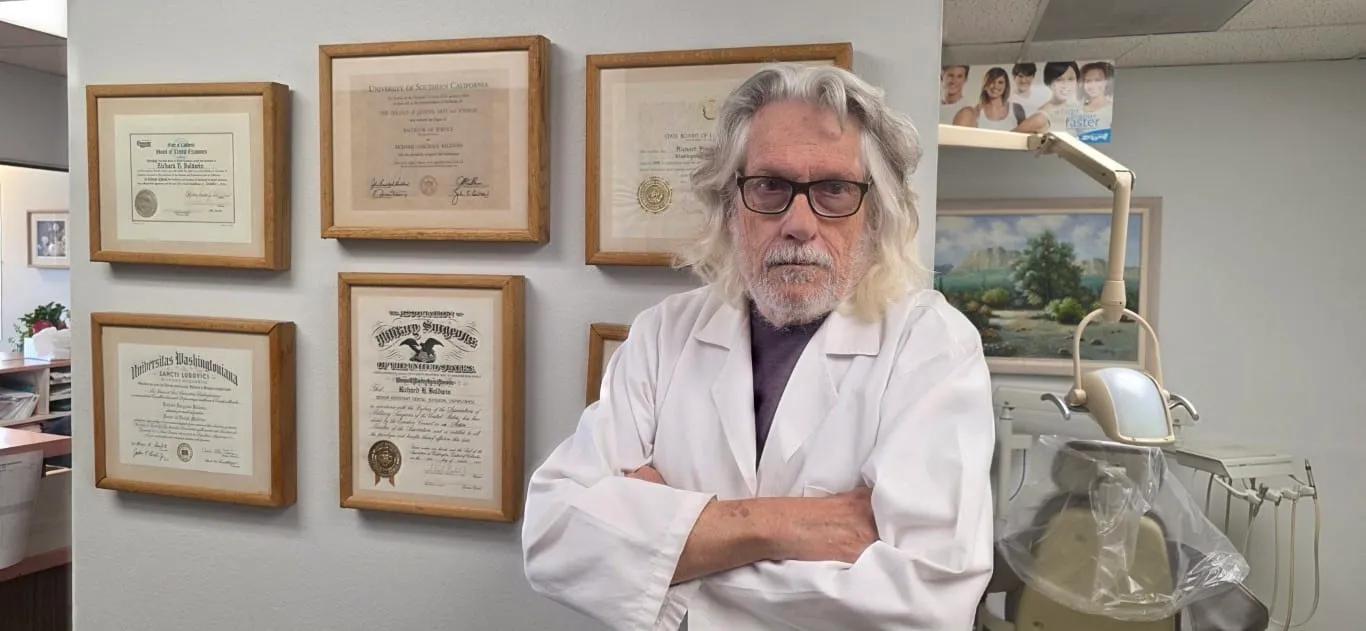
Written and clinically reviewed by Dr. Richard Baldwin, DMD General & cosmetic dentist in Huntington Beach since 1979 · Washington University School of Dental Medicine · Updated
Sources & further reading
- Brushing your teeth — American Dental Association · MouthHealthy
- Flossing — American Dental Association · MouthHealthy
- Dental X-rays — American Dental Association · MouthHealthy
- Tooth decay — National Institute of Dental and Craniofacial Research (NIH)
This guide is general dental information from a practicing dentist, not a diagnosis. Treatment recommendations and costs are confirmed at an in-person exam.