Jump to a section
- What Happens During Dental Implant Surgery
- Post-Operative Pain: A Day-by-Day Recovery Timeline
- How Dental Implant Pain Compares to a Tooth Extraction
- Pain Management Tips for a Smooth Recovery
- When to Call Your Dentist: Normal vs. Concerning Symptoms
- Why Experience Matters for Your Comfort
- The Cost of Waiting
- Schedule Your Consultation With Dr. Baldwin
If you have been putting off dental implants because the thought of someone drilling into your jawbone sounds unbearable, I understand that fear completely.
My name is Dr. Richard Baldwin, and I have been planning and restoring dental implants in Huntington Beach for decades. In that time, thousands of patients have asked me the same question: do dental implants hurt?
The honest answer? The procedure itself is virtually painless, and recovery is far more manageable than most people expect. In my experience, the vast majority of patients tell me afterward that it was less painful than the tooth extraction that led them here. Let me walk you through exactly what to expect.
What Happens During Dental Implant Surgery
Dental implant placement is a surgical procedure, but it is a carefully controlled one performed under thorough anesthesia.
Local Anesthesia: You Will Not Feel Pain
Before anything begins, the surgeon administers local anesthesia to completely numb the surgical area — the same numbing you receive for a standard filling or extraction. Once the area is numb, you will not feel any sharp or cutting sensations.
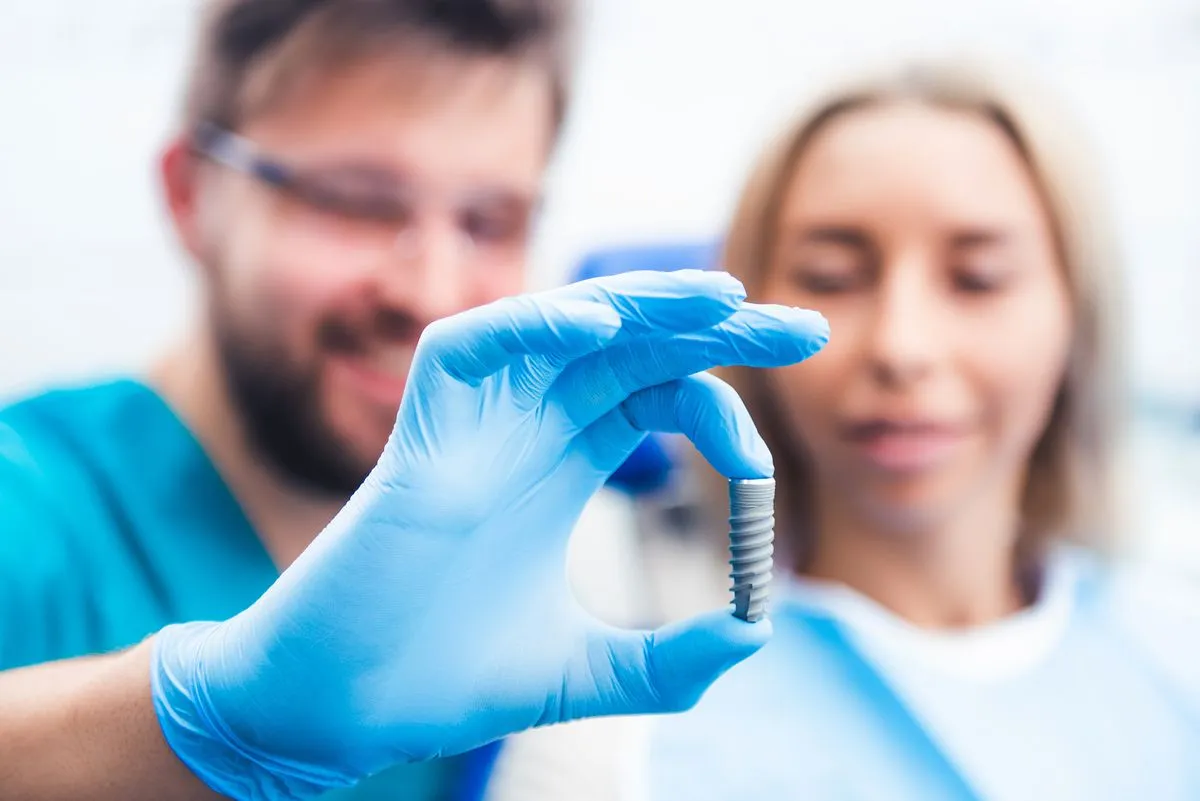
What you may feel is pressure. When the surgeon places the titanium post into your jawbone, you will likely notice a pushing or vibrating sensation. Patients describe it as someone pressing firmly on your gum. It is unusual, but it is not painful.
The entire procedure typically takes 30 to 60 minutes per implant.
If You Are Anxious About the Procedure
If you experience dental anxiety, tell us before we plan anything. Our office uses local anesthesia and does not provide sedation — but local anesthesia is what actually blocks the pain, and we take the time to be certain you are fully numb. For patients who need sedation, the oral surgeon who places the implant can discuss what their office offers. See our guide to staying comfortable without sedation.
In my experience, patients who were the most anxious beforehand are often the most surprised afterward. They frequently say, “That was it? I was worried for nothing.”
Post-Operative Pain: A Day-by-Day Recovery Timeline
There will be some discomfort after the anesthesia wears off — that is true of any surgical procedure. But the pain follows a predictable pattern and is very manageable.
Day of Surgery (Day 0)
Once the anesthesia wears off (two to four hours post-procedure), you will feel soreness at the implant site. I recommend taking your first dose of ibuprofen before the numbness fully fades so the medication is already working as sensation returns.
You will also notice minor bleeding and swelling. Apply an ice pack in 20-minute intervals (20 on, 20 off) and stick to soft, cool foods like yogurt, smoothies, or lukewarm soup. Avoid hot beverages and straws.
Most patients rate their day-of pain as a 3 or 4 out of 10 — noticeable but very tolerable.
Days 1 Through 3: The Peak
Swelling and discomfort reach their highest point in this window, peaking around 48 hours. Your jaw may feel stiff and the gum tissue will be tender to the touch.
Continue with ibuprofen or acetaminophen as directed. Keep icing during the first 48 hours, sleep with your head elevated on an extra pillow, and begin gentle warm salt water rinses 24 hours after surgery.
Even during this peak, most of my patients are functioning normally — working from home, reading, going about their day. The discomfort is present but does not dominate their experience.
Days 4 Through 7: Noticeable Improvement
By day four, most patients notice a significant turn for the better. Swelling begins to subside visibly, and the soreness transitions from a constant awareness to something you only feel when you touch or press on the area. Many patients stop taking pain medication entirely by day five or six.
You can begin introducing slightly firmer soft foods — scrambled eggs, pasta, mashed potatoes — but continue to chew on the opposite side of your mouth. Avoid crunchy, hard, or sticky foods that could disturb the implant site.
Week 2: Back to Normal Daily Life
By the end of week two, soft tissue has healed considerably. Any residual tenderness is minimal, and most patients have forgotten about the procedure entirely. You can gradually return to your normal diet, though I recommend avoiding very hard foods at the implant site. Sutures are typically removed or dissolved by this point.
Month 1 and Beyond: Osseointegration
Surface healing is largely complete within two to three weeks, but beneath the gum line your jawbone is gradually fusing with the titanium post — a process called osseointegration that gives implants their remarkable strength. This takes three to six months and should not involve pain. The site may occasionally feel slightly different from surrounding teeth, but if you experience sharp pain, throbbing, or increasing soreness, contact our office right away.
How Dental Implant Pain Compares to a Tooth Extraction
If you have ever had a tooth pulled, you already have a reliable frame of reference — and the news is good.
Extraction involves separating a living tooth from the periodontal ligament, blood vessels, and nerves, which creates significant tissue trauma. Implant placement, by contrast, creates a clean, precise channel in the jawbone and threads a biocompatible titanium post into it. The bone has far fewer nerve endings than the soft tissue involved in an extraction.
In my experience, about 8 out of 10 patients tell me their implant was noticeably less painful than the extraction that preceded it. Implant surgery is not pain-free — but if you survived an extraction, you can absolutely handle this.
Pain Management Tips for a Smooth Recovery
For decades, I have refined the recovery guidance I give patients. These strategies make the biggest difference:
- Stay ahead of the pain. Take your first dose of pain medication before the anesthesia wears off. It is much easier to prevent pain from building than to chase it once it has started.
- Use ice consistently for 48 hours. Twenty minutes on, twenty minutes off. This single step reduces swelling dramatically.
- Do not smoke. Smoking restricts blood flow to the surgical site and significantly increases the risk of complications and prolonged pain. If you smoke, try to abstain for at least 72 hours before and after surgery — longer is better.
- Avoid straws and spitting. The suction can dislodge the blood clot forming at the surgical site.
- Eat soft, nutritious foods. Your body needs fuel to heal. Protein shakes, yogurt, scrambled eggs, and soups are excellent choices during the first week.
- Sleep elevated. An extra pillow under your head keeps blood from pooling at the surgical site overnight.
- Attend every follow-up appointment. These visits allow me to catch any issues early and confirm that healing is progressing normally.
When to Call Your Dentist: Normal vs. Concerning Symptoms
Normal and expected: Mild to moderate soreness, swelling that peaks around day two then gradually decreases, minor bruising, slight bleeding on surgery day, and stiffness when opening wide.
Call us if you experience: Pain that suddenly worsens after days of improvement, swelling increasing after the 72-hour mark, fever above 101 degrees Fahrenheit, pus or discharge from the site, persistent numbness or tingling beyond 24 hours, or the feeling that the implant is loose.
These symptoms do not necessarily mean something has gone wrong, but I want to evaluate promptly. Dental implant success rates exceed 95 percent, and early intervention makes all the difference. To understand the rare circumstances that can lead to problems, read our article on dental implant failure.
Why Experience Matters for Your Comfort
The skill of your provider directly affects how much discomfort you experience. A surgeon who has placed thousands of implants works more efficiently, creates less tissue trauma, and anticipates challenges before they become problems. That is exactly why we refer placement to a specialist rather than doing it ourselves — and why we plan every case in 3D before they ever pick up an instrument.
The Cost of Waiting
Fear of pain can make postponement feel safe, but delaying implants has real consequences. The jawbone beneath a missing tooth begins to deteriorate immediately, and the longer you wait, the more bone loss occurs — eventually requiring bone grafting, which adds complexity and recovery time.
If cost is also a concern, read our guide on dental implant costs in Huntington Beach to make a fully informed decision.
Schedule Your Consultation With Dr. Baldwin
You have done the research. You know that the fear of pain is almost always worse than the reality. The next step is a simple conversation.
At HB Dentist in Huntington Beach, I personally meet with every implant patient for a thorough consultation. We will review your dental history, take any necessary imaging, discuss your specific situation, and answer every question you have — no question is too small when it comes to your health and comfort.
If dental implant pain has been the one thing holding you back, I want to put that worry to rest. Contact our Huntington Beach office today to schedule your consultation, and let me show you why so many patients say the same thing: “I wish I had done this sooner.”
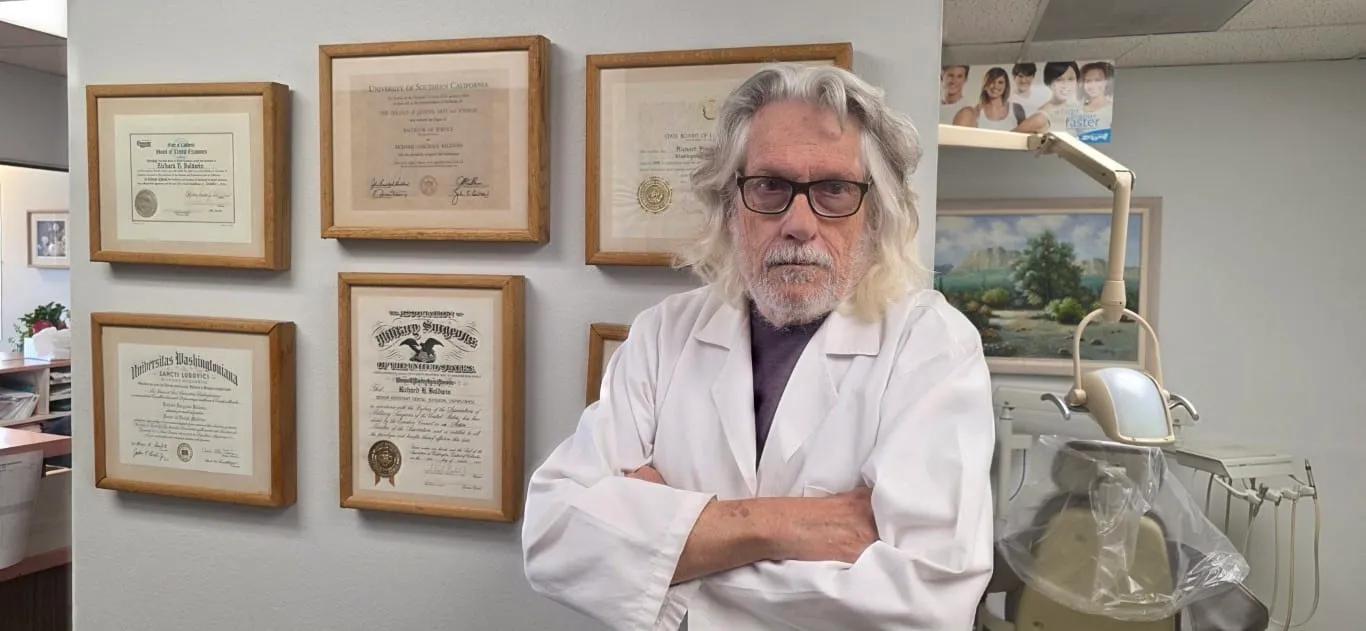
Written and clinically reviewed by Dr. Richard Baldwin, DMD General & cosmetic dentist in Huntington Beach since 1979 · Washington University School of Dental Medicine · Updated
Sources & further reading
- Dental implants — American Dental Association · MouthHealthy
- Dental implant surgery — American Association of Oral and Maxillofacial Surgeons
- Gum disease and implant health — American Academy of Periodontology
This guide is general dental information from a practicing dentist, not a diagnosis. Treatment recommendations and costs are confirmed at an in-person exam.