Jump to a section
- Two Paths to the Same Goal: A Better Smile
- What Are Traditional Porcelain Veneers?
- What Are Lumineers?
- Side-by-Side Comparison
- Thickness and What It Means for Your Smile
- Preparation: What Happens to Your Teeth
- Durability and Longevity
- Appearance: Which Looks More Natural?
- Cost Comparison
- Who Is a Good Candidate for Each?
- Pros and Cons at a Glance
- The Bottom Line
Two Paths to the Same Goal: A Better Smile
When patients tell me they want to improve their smile, the conversation often turns to veneers. And within that conversation, one question comes up more than any other: “What about Lumineers? Are they better than regular veneers?”
It is a fair question, and the answer is more nuanced than most websites make it sound. Both Lumineers and traditional porcelain veneers are proven cosmetic treatments that can dramatically improve the appearance of your teeth. But they are not interchangeable. Each has distinct advantages, limitations, and ideal candidates, and choosing the wrong one can lead to results that fall short of your expectations.
After decades of placing both Lumineers and traditional veneers at our Huntington Beach practice, I have developed a clear sense of when each option shines. This guide gives you the same information I share with my patients so you can walk into your consultation already understanding the key differences.
What Are Traditional Porcelain Veneers?
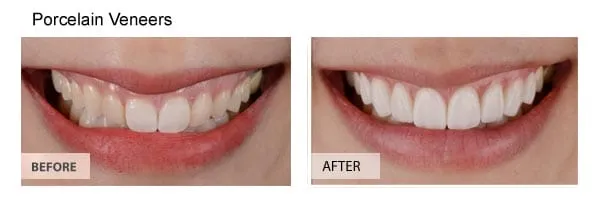
Traditional porcelain veneers are thin shells of dental ceramic, typically about 0.5 millimeters thick, that are custom-fabricated in a dental laboratory and permanently bonded to the front surfaces of your teeth. They have been the gold standard in cosmetic dentistry for decades.
The process requires two appointments. During the first visit, I remove a thin layer of enamel from the front of each tooth — usually about half a millimeter — to create space for the veneer so it does not look or feel bulky. Impressions are taken and sent to our lab, and temporary veneers protect your teeth while the permanent ones are being crafted. At the second appointment, the temporary veneers are removed, the permanent veneers are checked for fit and color, and they are bonded in place.
Because enamel is removed during preparation, traditional veneers are an irreversible procedure. Once you commit, those teeth will always need to be covered by veneers or another restoration.
To learn more about what the veneer process involves and the range of issues it addresses, visit our guide to porcelain veneers in Huntington Beach.
What Are Lumineers?
Lumineers are a specific brand of ultra-thin porcelain veneers made exclusively by DenMat Labs using their proprietary Cerinate porcelain. At approximately 0.2 millimeters thick — about the thickness of a contact lens — Lumineers are significantly thinner than traditional veneers.
The key selling point is that Lumineers typically require little to no enamel removal. In many cases, the veneer is bonded directly over the existing tooth surface without drilling or reshaping. This makes the procedure less invasive, often eliminates the need for anesthesia, and — critically — makes it potentially reversible.
You can learn more about how we use Lumineers by Cerinate at our Huntington Beach office.
Side-by-Side Comparison
Here is a direct comparison of the key factors that matter most when making your decision:
| Feature | Lumineers | Traditional Veneers |
|---|---|---|
| Thickness | ~0.2 mm | ~0.5 mm |
| Enamel removal | Minimal to none | 0.3–0.5 mm removed |
| Anesthesia needed | Rarely | Usually local anesthesia |
| Number of visits | 2 | 2 |
| Reversibility | Often reversible | Not reversible |
| Durability | 10–15 years | 10–20 years |
| Stain resistance | Good | Excellent |
| Appearance | Natural, slightly less translucent | Highly natural, excellent translucency |
| Cost per tooth | $800–$2,000 | $1,000–$2,500 |
| Best for | Minor corrections, conservative patients | Comprehensive smile transformations |
Thickness and What It Means for Your Smile
The thickness difference between Lumineers and traditional veneers is the single factor that drives most of the other differences.
Traditional veneers at 0.5 millimeters are thick enough to fully mask discoloration, reshape teeth significantly, and achieve a highly customized result. The lab technician has more material to work with, which means more control over color gradation, translucency, and surface texture — the subtle qualities that make a veneer look indistinguishable from a natural tooth.
Lumineers at 0.2 millimeters are remarkably thin, which is what allows them to be placed without removing enamel. However, that thinness means they are slightly less effective at masking severe discoloration. Very dark underlying teeth may show through, and the technician has less room to build in the natural translucency that makes porcelain veneers look lifelike. That said, for patients with mild to moderate cosmetic concerns, Lumineers can look beautiful and completely natural.
Preparation: What Happens to Your Teeth
This is where the two options diverge most significantly, and it is the factor that matters most to many patients.
Traditional veneers require the removal of a thin layer of enamel — typically about half a millimeter from the front surface of each tooth. This is done to ensure the veneer sits flush with your natural tooth contour and does not look or feel bulky. The prep is permanent: once enamel is removed, it does not regenerate. Your teeth will need to be covered by veneers (or another restoration) for the rest of your life.
Lumineers are thin enough that they can usually be placed directly over the existing tooth with minimal or no enamel removal. For many patients, this means no drilling, no shots, and no temporary veneers. It also means the procedure is potentially reversible — if you ever decide to remove them, the underlying tooth is largely intact.
However, “no-prep” does not mean every Lumineer case requires zero preparation. In some situations — if teeth are protruding, if the bite needs adjustment, or if there are slight irregularities — minimal reshaping may still be necessary to achieve the best fit and appearance.
Durability and Longevity
Both options are durable, but traditional veneers generally have the edge in longevity.
Traditional porcelain veneers typically last 10 to 20 years with proper care. The thicker porcelain is more resistant to chipping and fracture, and the stronger bond created by the etched enamel surface contributes to their long-term stability. Many of my patients have veneers that are still looking excellent after 15 years.
Lumineers are rated to last 10 to 15 years. While the Cerinate porcelain is strong for its thickness, the thinner profile makes them slightly more susceptible to chipping under heavy biting forces. They also rely on a bond to an unetched (or minimally etched) tooth surface, which can be slightly less robust than the bond achieved with traditional veneer preparation.
Both types require the same basic care: brush twice daily, floss daily, avoid biting hard objects, and visit your dentist regularly. Neither is a reason to skip your routine checkups.
Appearance: Which Looks More Natural?
Both Lumineers and traditional veneers can look excellent in the hands of an experienced cosmetic dentist. The difference comes down to the level of customization possible.
Traditional veneers offer the highest degree of aesthetic control. The thicker porcelain allows the lab to layer different shades and translucencies within each veneer, mimicking the way natural teeth reflect light. The result is often described as “indistinguishable from natural teeth.” For patients seeking a dramatic smile transformation — correcting multiple mismatched, stained, or uneven teeth — traditional veneers provide the most lifelike result.
Lumineers can also produce a natural-looking result, particularly for patients whose underlying teeth are already reasonably well-aligned and light in color. Because they are thinner, they may appear slightly more opaque or uniform in translucency compared to traditional veneers. Skilled lab work and proper shade selection minimize this difference, but for the most demanding aesthetic cases, traditional veneers usually have the advantage.
One consideration worth noting: because Lumineers are placed over the existing tooth without removing enamel, they add a small amount of thickness to the tooth surface. In most cases this is imperceptible. However, for patients with already prominent or slightly bulky teeth, the added thickness can occasionally make the teeth look slightly over-contoured. This is something we evaluate carefully during the planning phase.
Cost Comparison
Cost varies by case, but here are the general ranges you can expect:
- Lumineers: $800 to $2,000 per tooth
- Traditional porcelain veneers: $1,000 to $2,500 per tooth
Most cosmetic veneer work is not covered by dental insurance since it is considered elective. However, if a veneer also restores a damaged or decayed tooth, a portion of the cost may be covered. We recommend checking with your insurance provider and reading our dental insurance guide to understand your benefits.
When comparing costs, factor in longevity. If traditional veneers last 15 to 20 years compared to 10 to 15 for Lumineers, the annual cost of ownership may actually be similar despite the higher upfront price.
Who Is a Good Candidate for Each?
Choose Lumineers If:
- You want to avoid drilling and enamel removal
- Your cosmetic concerns are mild to moderate (minor gaps, slight unevenness, mild discoloration)
- Reversibility is important to you
- Your underlying teeth are healthy, well-aligned, and light in color
- You want a less invasive procedure with minimal chair time
Choose Traditional Veneers If:
- You are looking for a comprehensive smile transformation
- You have significant discoloration, tetracycline staining, or dark teeth
- Multiple teeth need reshaping, lengthening, or alignment correction
- You want the longest-lasting result possible
- Maximum aesthetic control and translucency matter to you
- You have already had enamel work done on the teeth in question
Consider Dental Bonding If:
If your cosmetic concerns are limited to one or two teeth with minor chips or gaps, dental bonding may be the most cost-effective starting point. Bonding is fully reversible, completed in one visit, and significantly less expensive than either Lumineers or traditional veneers. You can always upgrade later.
Pros and Cons at a Glance
Lumineers Pros:
- Minimal to no enamel removal
- Often reversible
- Less chair time, usually no anesthesia
- Good option for conservative patients
- Effective for mild to moderate cosmetic improvements
Lumineers Cons:
- Less effective at masking severe discoloration
- Slightly shorter lifespan than traditional veneers
- Can occasionally appear slightly bulky on prominent teeth
- Less aesthetic customization compared to thicker porcelain
Traditional Veneers Pros:
- Superior aesthetic control and translucency
- Longest-lasting option (10 to 20 years)
- Excellent for comprehensive smile makeovers
- Better at masking severe staining and discoloration
- Highly resistant to staining
Traditional Veneers Cons:
- Requires irreversible enamel removal
- Anesthesia typically required
- Two visits with temporaries in between
- Higher upfront cost
The Bottom Line
The Lumineers vs traditional veneers decision is not about one being “better” than the other. It is about matching the right tool to your specific situation, goals, and comfort level. Lumineers are an excellent, conservative option for patients who want to enhance their smile without permanently altering their tooth structure. Traditional veneers remain the gold standard when the goal is a dramatic, long-lasting transformation with the highest level of aesthetic control.
If you are also weighing full-coverage restorations for a damaged or weakened tooth, our dental crowns vs veneers guide explains when a crown is the better fit.
The only way to know which option is truly right for you is to have your teeth evaluated in person. Every smile is different — tooth color, alignment, bite, gum position, and facial proportions all play a role in the recommendation. A 20-minute consultation gives us everything we need to map out a plan tailored specifically to you.
Curious which option fits your smile? Call HB Dentist at (714) 536-2571 or book your cosmetic consultation online. Dr. Richard Baldwin has been creating beautiful smiles in Huntington Beach for decades, and we look forward to helping you find the perfect path to yours.
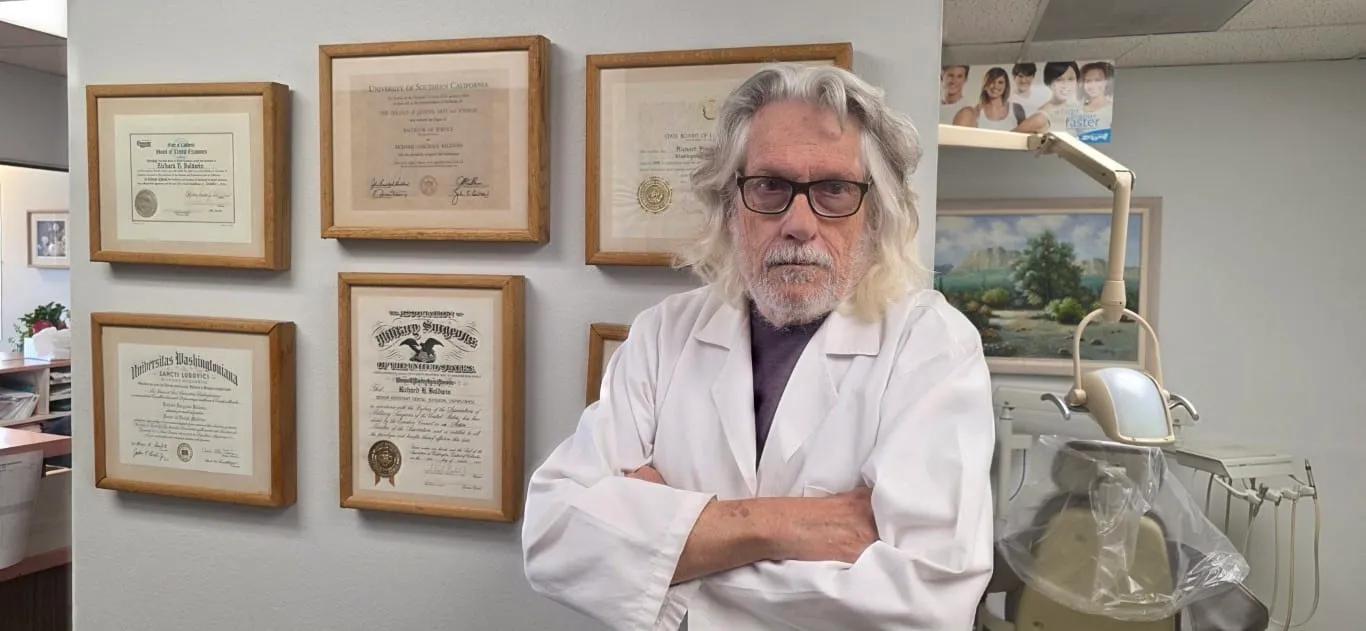
Written and clinically reviewed by Dr. Richard Baldwin, DMD General & cosmetic dentist in Huntington Beach since 1979 · Washington University School of Dental Medicine · Updated
Sources & further reading
- Veneers — American Dental Association · MouthHealthy
This guide is general dental information from a practicing dentist, not a diagnosis. Treatment recommendations and costs are confirmed at an in-person exam.