Jump to a section
If you wake up with a sore jaw, hear clicking every time you chew, or struggle to open your mouth wide enough to eat comfortably, you already know something is wrong. You may have searched for “TMJ treatment Huntington Beach” hoping to find answers — and relief. You are not alone. More than 10 million Americans live with temporomandibular joint disorders, and many suffer for years before seeking help.
I am Dr. Richard Baldwin, DMD. During my decades practicing dentistry in Huntington Beach, I have helped thousands of patients find lasting TMJ relief. In this guide, I will explain what TMJ disorders are, what causes them, how we diagnose them, and the treatment options available to you.
What Is TMJ/TMD?
TMJ stands for temporomandibular joint — the hinge-like joint on each side of your head connecting your lower jaw to your skull. You use these joints every time you talk, chew, yawn, or swallow. A small cartilage disc inside each joint keeps everything moving smoothly.
When something goes wrong with these joints or the muscles controlling them, the condition is called temporomandibular disorder (TMD). Most people use “TMJ” to refer to both the joint and the disorder, so we will use both terms here.
TMD is not a single condition — it is an umbrella term for a group of problems affecting the jaw joint, surrounding muscles, or both. The good news is that the vast majority of cases respond well to conservative, non-surgical treatment, especially when caught early.
What Causes TMJ Disorders?
Understanding the root cause is the first step toward effective treatment. In many patients, multiple factors work together.
Stress and Muscle Tension
Stress is one of the most common contributors to TMJ pain. Under pressure, you may unconsciously clench your jaw or tighten facial muscles. Over time, this exhausts the muscles around your jaw joint and leads to inflammation, spasms, and pain. If stress or dental anxiety has kept you from seeking treatment, know that we approach every visit with patience and compassion.
Teeth Grinding and Clenching (Bruxism)
Bruxism — grinding or clenching your teeth, often during sleep — places enormous repetitive force on the temporomandibular joint. Many people do not realize they grind until a dentist spots worn tooth surfaces, cracked enamel, or sore jaw muscles. A custom night guard for teeth grinding is one of the most effective ways to protect your jaw and teeth from bruxism damage.
Arthritis
Both osteoarthritis and rheumatoid arthritis can affect the TMJ just as they affect knees and hips. Arthritis breaks down the cartilage disc inside the joint, leading to bone-on-bone contact, stiffness, and pain.
Bite Misalignment and Jaw Injury
When your upper and lower teeth do not fit together properly, your jaw muscles work harder to compensate, placing uneven stress on the joint. Similarly, a blow to the face, whiplash from a car accident, or even prolonged mouth opening during a dental procedure can damage the joint or displace the cartilage disc.
Habitual Behaviors
Chewing gum for hours, biting your nails, cradling a phone between your ear and shoulder, or resting your chin on your hand — these small habits strain the jaw joint over time.
Recognizing the Symptoms of TMJ Disorders
TMJ disorders present with a wide range of symptoms, which is why the condition is so frequently misdiagnosed. If you experience any combination of the following, schedule an evaluation.
Jaw Pain and Clicking
The hallmark symptom is pain concentrated in front of your ear, along your jawline, or deep within the joint — often worsening with chewing or yawning. Many patients also hear an audible click or pop when opening or closing their mouth, indicating the cartilage disc has shifted. Grinding sounds (crepitus) may suggest arthritis within the joint.
Headaches, Ear Pain, and Referred Pain
The muscles controlling your jaw extend into your temples. When strained, they produce pain that feels identical to tension headaches or migraines. Because the TMJ sits directly in front of the ear canal, dysfunction also produces earaches, ear fullness, or ringing (tinnitus). Patients frequently visit ENT specialists before discovering the symptoms originate in the jaw. Pain can also radiate into the neck and shoulders.
Lockjaw
In more advanced cases, the jaw may lock open or closed when the disc becomes displaced or severe muscle spasms restrict movement. Lockjaw episodes are frightening, but treatable.
How We Diagnose TMJ Disorders
Accurate diagnosis is essential because TMJ symptoms overlap with ear infections, sinus problems, and neurological disorders. At our Huntington Beach office, the process includes:
- Health history — We review your symptoms, stress levels, sleep habits, and any history of jaw injury or arthritis.
- Physical examination — We palpate the jaw joints and muscles to locate tenderness and spasm, listen for clicking, and measure your jaw’s range of motion.
- Bite analysis — We check how your teeth come together, looking for malocclusion and uneven wear.
- Digital imaging — X-rays or a CBCT scan reveal the joint’s bone structure, disc position, and any signs of degeneration.
Once we understand the nature and severity of your disorder, we build a personalized treatment plan starting with the least invasive options.
TMJ Treatment Options in Huntington Beach
Roughly 80 to 90 percent of TMJ cases improve significantly with conservative, non-surgical treatment. Here are the options we offer and recommend.
Self-Care and Lifestyle Modifications
For mild symptoms, simple changes make a real difference:
- Soft diet — Softer foods reduce jaw workload and give inflamed tissues time to heal.
- Heat and cold therapy — A warm compress for 10 minutes followed by a cold pack for 5 minutes eases muscle tension and swelling.
- Jaw rest — Avoid wide yawning, gum chewing, and tough foods like bagels or steak.
- Stress management — Deep breathing, meditation, and regular exercise reduce the clenching that drives TMJ pain.
Custom Night Guards and Oral Splints
For patients who grind or clench during sleep, a custom-fitted night guard is one of the most effective TMJ treatments available. Unlike drugstore boil-and-bite guards, a professionally fabricated guard positions your jaw in relaxed, neutral alignment, cushions the joint, and prevents tooth-on-tooth damage. Learn more about how a night guard for teeth grinding works.
Physical Therapy and Jaw Exercises
Targeted exercises strengthen the muscles around the jaw, improve range of motion, and reduce pain. We teach patients stretching routines for home use and, when needed, refer to a physical therapist specializing in orofacial pain.
Medication
Depending on severity, we may recommend over-the-counter anti-inflammatories like ibuprofen, a short course of muscle relaxants to break the spasm-pain cycle, or low-dose tricyclic antidepressants that help with chronic pain conditions including TMD.
Botox for TMJ Pain
Botulinum toxin (Botox) injections into the masseter and temporalis muscles are highly effective for muscle-driven TMJ pain. Botox temporarily relaxes the overactive muscles responsible for clenching, with most patients feeling significant relief within one to two weeks. Effects last three to four months, making this an excellent option when a night guard alone is not enough.
Bite Adjustment and Dental Correction
If a misaligned bite contributes to your TMJ disorder, correcting it addresses the problem at its source. We also make custom night guards and splints at our Huntington Beach office for grinding and jaw symptoms. Options include occlusal adjustment (selective reshaping of tooth surfaces), orthodontic treatment, or restorative work like crowns or bridges. For patients who feel anxious about procedures, here is how we keep you comfortable without sedation.
Surgery — A Last Resort
Surgery is rare and reserved for cases unresponsive to conservative treatment. Options range from minimally invasive arthrocentesis (flushing the joint to remove debris) to arthroscopic or open-joint surgery. We exhaust every non-surgical approach before considering a referral.
Preventing TMJ Disorders
You can significantly reduce your risk with a few daily habits:
- Stay mindful of clenching. At rest, your teeth should be slightly apart with your tongue on the roof of your mouth.
- Manage stress proactively. Exercise, adequate sleep, and relaxation techniques protect your jaw as much as your overall health.
- Wear a night guard. If you grind your teeth, this is the single most effective preventive measure.
- Maintain good posture. Forward head posture strains the muscles connecting your neck to your jaw. Keep your screen at eye level and take breaks to stretch.
- Limit jaw strain. Cut food into smaller pieces, skip the gum, and never use your teeth as tools.
- Keep up with dental visits. Your dentist can spot early signs of bruxism and bite changes before they become a full TMJ disorder.
Find TMJ Treatment in Huntington Beach Today
Living with chronic jaw pain affects how you eat, sleep, and enjoy your life. You do not have to keep pushing through it hoping it resolves on its own. If severe tooth and jaw pain starts suddenly or comes with swelling, review our severe tooth and jaw pain emergency guidance and call the office.
At HB Dentist, we have helped Huntington Beach families find relief from TMJ disorders for decades. Whether your symptoms just started or you have dealt with jaw pain for years, we will listen, diagnose thoroughly, and build a treatment plan tailored to you.
Call our Huntington Beach office today at (714) 536-2571 or request an appointment online to schedule your TMJ evaluation. Relief is closer than you think.
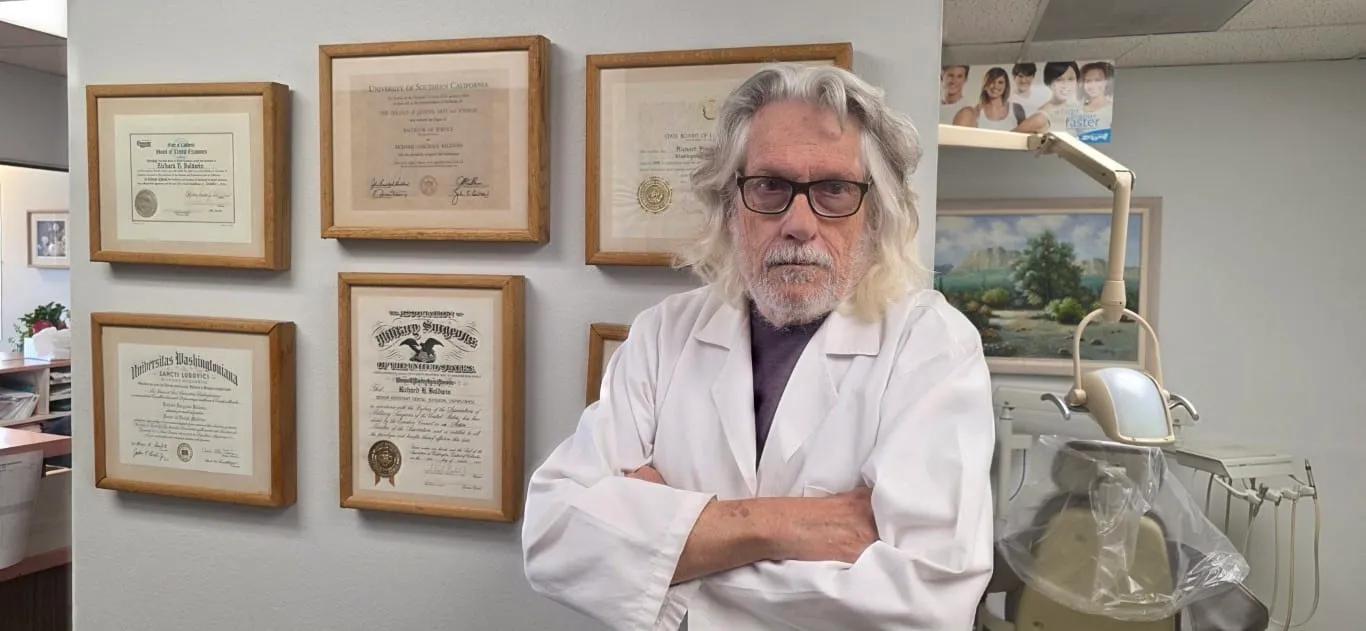
Written and clinically reviewed by Dr. Richard Baldwin, DMD General & cosmetic dentist in Huntington Beach since 1979 · Washington University School of Dental Medicine · Updated
Sources & further reading
- TMJ disorders (TMD) — National Institute of Dental and Craniofacial Research (NIH)
- TMJ — American Dental Association · MouthHealthy
- Mouthguards — American Dental Association · MouthHealthy
This guide is general dental information from a practicing dentist, not a diagnosis. Treatment recommendations and costs are confirmed at an in-person exam.